Protect Your New AC Investment in the First 72 Hours
The first 72 hours after a new AC installation in Los Angeles matter a lot. This is when small issues may appear, factory oils burn off, and when you find out if the system was set up the right way.Paying attention during these first few days helps protect your comfort, safety, and warranty coverage.
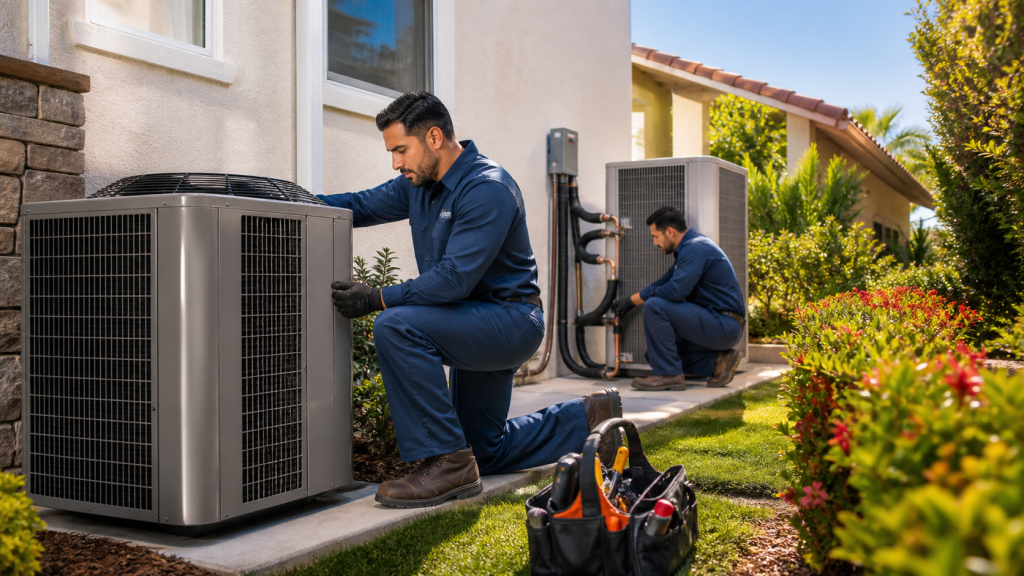
In this window, a properly installed system should give you steady, even cooling. You might notice a light dusty or warm smell right at startup, but it should fade quickly. The system should cycle on and off at reasonable times, not run nonstop with barely any temperature change. As an HVAC contractor working on homes across Los Angeles, Ventura, and Orange Counties, we focus on these early signs so homeowners can catch issues before they turn into bigger problems.
Confirm Safe, Code-Compliant Installation Work
Before anything else, your new AC has to be safe and code-compliant. Much of this work is behind the scenes, so it helps to know what to check.
Start with the electrical side at the outdoor unit:
- There should be a clearly visible disconnect box near the condenser, mounted securely on the wall.
- Wiring should not be loose or hanging, and there should be no exposed copper conductors.
- The breaker in your panel should match the equipment specs your installer reviewed during setup.
- Nothing should feel warm or smell electrical when the system is running.
Next, look at the refrigerant line-set, the pair of copper lines running between indoor and outdoor units:
- Both lines, especially the larger suction line, should be insulated where exposed.
- Lines should be supported, not sagging or rubbing on sharp edges.
- You should not see kinks, crushed spots, or oil stains on the insulation that might hint at leaks.
Inside, check the condensate and drainage setup around your air handler or furnace with coil:
- The drain line should be firmly connected and sloped toward an approved drain point.
- There should be no dripping at fittings, joints, or at the unit itself.
In many attic or ceiling installs, there should be a secondary drain pan and often a float switch to shut the system off if water backs up.
If anything looks unsafe or you are unsure about code requirements, it is better to have a licensed HVAC professional review the work right away, rather than wait for damage to show up.
Verify Cooling Performance Room by Room
Once you know the system is set up safely, the next step in the first 72 hours is checking how well it cools your home. Start with the thermostat. It should be level on the wall, mounted solid, and easy to read. Make sure it is programmed for cooling mode and set to a realistic temperature based on the outdoor conditions during a typical Los Angeles spring afternoon.
Give the system a little time to run, then walk your home:
- Stand under each supply register and feel for steady, noticeable airflow.
- Pay attention to rooms at the end of long hallways or above garages, since they often have comfort issues if ductwork is not balanced well.
- Make sure return grilles are pulling air and are not blocked by furniture or doors that stay closed all day.
You can also inspect accessible ductwork in attics, closets, or under the home where safe. Look for:
- Ducts that are crushed, kinked, or clearly disconnected.
- Noisy, rattling supply grilles that might be loose.
- Dust streaks along duct seams, which can hint at air leaks that cut into capacity and efficiency.
By comparing room-by-room comfort in the first few days, you can spot airflow problems early, before the hottest part of the year makes them unbearable.
Listen, Look, and Smell for Warning Signs
Your senses are powerful tools when checking a new AC installation in Los Angeles. The system will have its own sound, but it should not sound rough or angry.
From both indoor and outdoor units:
- You should not hear banging, grinding, or metal-on-metal sounds.
- A steady hum or soft fan noise is normal, but hard shaking or strong vibration is not.
- If the outdoor unit rocks on its pad, it may not be level or secured correctly.
Pay attention to smells. A brief warm or dusty odor at first startup can be normal as new parts heat up and any factory oils burn off. What is not normal:
- Persistent burning plastic or electrical smells.
- Strong chemical or sharp odors.
- Musty, damp smells that do not go away, especially near the indoor unit.
Visually, watch for water around the indoor equipment, ice forming on refrigerant lines, or repeatedly tripped safety switches. Outside, the condenser should have open space on all sides, with plants and walls kept back enough for good airflow. The unit should sit level on its pad, not tilted. Hot discharge air should blow away from the house, not into a tight corner where it gets pulled right back into the unit.
Optimize Settings for Efficiency and Longevity
Once you know the system is safe and running smoothly, you can fine-tune settings so it runs efficiently and lasts longer. A smart thermostat or a basic digital model can both work well if set up correctly.
Check that:
- The system type is set correctly in the thermostat menu.
- Cooling schedules match your routine, with gentle temperature changes instead of big swings.
- The fan setting is usually on auto unless a professional suggests a different setup.
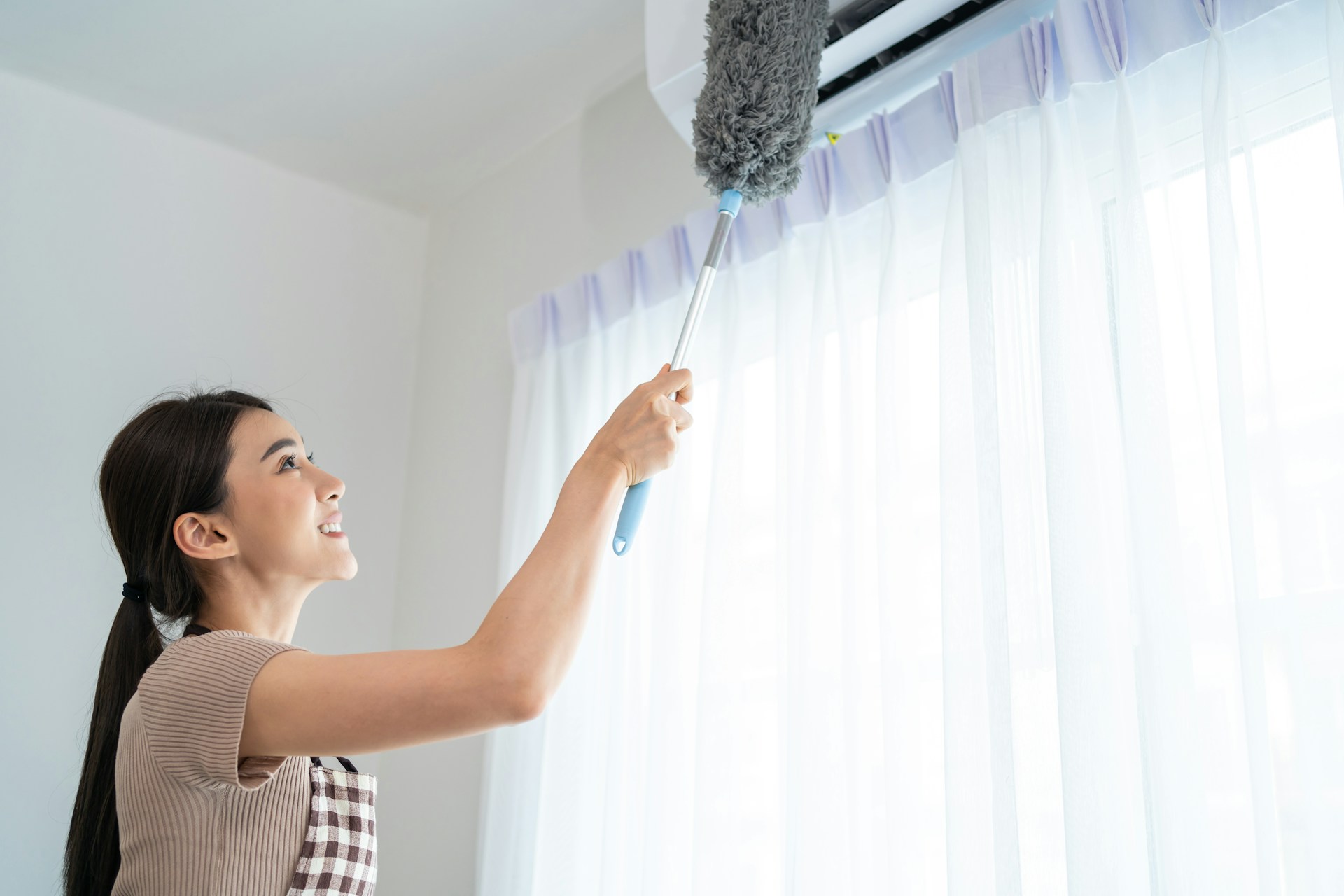
Filters are simple but easy to overlook. In the first 72 hours, confirm:
- The filter size matches the return opening and fits snugly.
- The arrow on the filter frame points toward the indoor unit.
- Returns are not blocked by curtains, furniture, or thick rugs.
If you have access to a smart thermostat energy report or can glance at your utility meter a few times, you may notice if the system is running almost nonstop with only small temperature changes. That can be a sign of sizing, airflow, or charge issues that should be checked by a technician.
When to Call the Installer Back to the Job
Even with careful planning, some systems need a little fine-tuning in the first few days. The key is knowing which signs mean you should get your installer back out soon.
Red flags in the first 72 hours include:
- Breakers tripping when the AC starts or runs.
- No cooling at all or supply vents that only blow room temperature air.
- Water leaks on ceilings, walls, or floors near the indoor unit.
- Extreme temperature swings, hot and cold spots that are more than just a preference issue.
- Error codes on the thermostat or on the indoor or outdoor unit.
A licensed HVAC contractor can adjust airflow, refrigerant charge, and controls to better match local conditions in Los Angeles, Ventura, or Orange County homes. Sometimes the fix is a simple adjustment, like balancing dampers or tweaking fan speed. Other times, there may be a part that needs to be addressed under warranty.
A good HVAC company will explain the difference between minor corrections and real repairs, and will help you understand what is covered by manufacturer warranties and what falls under post-installation workmanship. Getting these items handled early gives your new system a strong start and helps protect your long-term comfort and energy use as the weather warms up.
Get Started With Your Project Today
If you are ready to replace an aging unit or install a new, energy-efficient system, our team at Best HVAC LA is here to help you plan the right solution for your home. Learn more about our expert AC installation in Los Angeles and what to expect from our process. We will walk you through system options, provide a clear estimate, and schedule work at a time that fits your routine. Have questions or need a quick quote? Just contact us and we will respond promptly.