
Air Handlers: The Heart of Your HVAC System and Why Maintenance Matters
Your HVAC system keeps your home comfortable, but the unsung hero behind the scenes is often the air handler. This critical component moves heated or cooled air throughout your home, ensuring every room stays at the temperature you set. Without proper maintenance, even the best heating and cooling system can underperform, waste energy, and reduce indoor air quality.
In this guide, we’ll explore what air handlers do, why they are essential, and how routine maintenance can keep your home comfortable and healthy.
What Is an Air Handler?
An air handler, sometimes called an AHU (Air Handling Unit), is the part of your HVAC system responsible for circulating conditioned air through ductwork. It usually works in tandem with:
- A furnace (for heating)
- An air conditioner or heat pump (for cooling)
- Filters, humidifiers, or UV lights (for air quality)
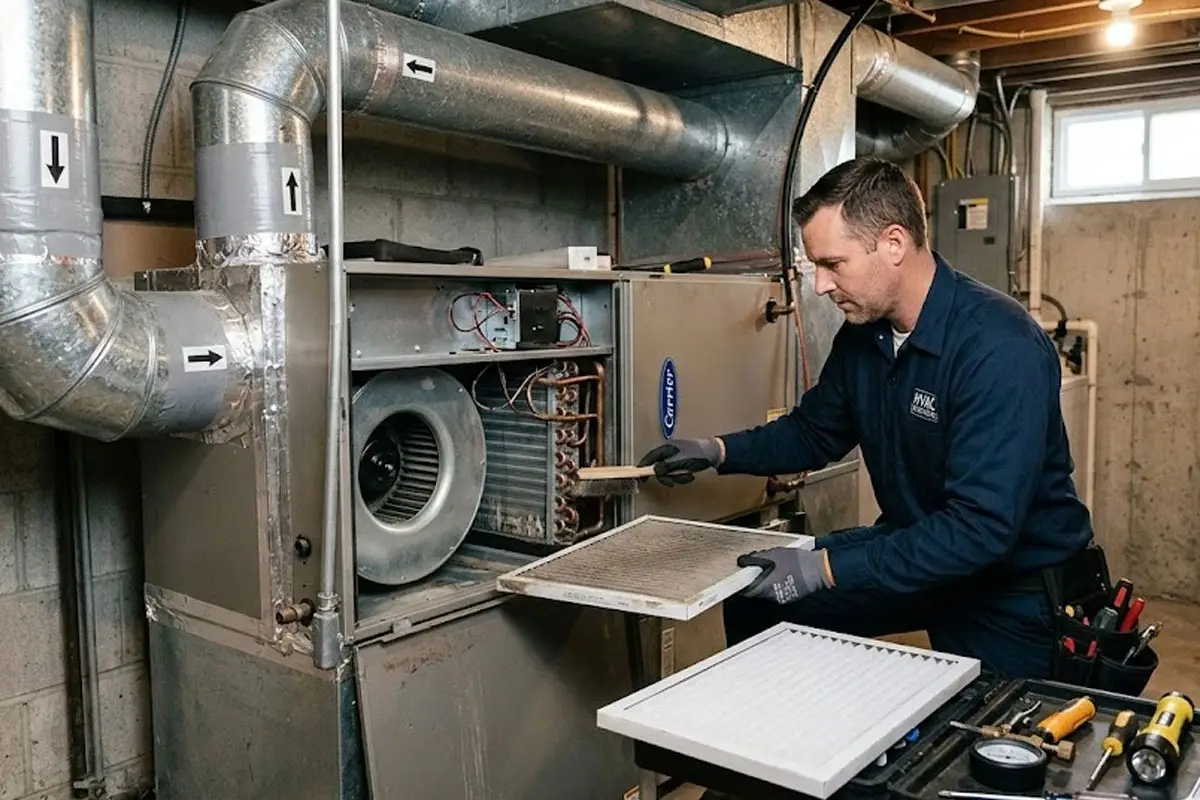
Key components of an air handler include:
- Blower fan
- Evaporator coil
- Filters
- Heating or cooling elements (if integrated)
- Duct connections
Brands like Carrier, Trane, and Lennox produce a variety of air handler units, but all require regular attention to operate efficiently.
Why Air Handler Maintenance Is Critical
Air handlers are the circulatory system of your home’s HVAC setup. Neglecting maintenance can cause:
- Reduced airflow and uneven temperatures
- Higher energy bills
- Increased strain on your HVAC system
- Poor indoor air quality
- Premature system failure
Regular maintenance ensures your air handler operates efficiently and keeps your system running smoothly year-round.
Key Maintenance Tasks for Air Handlers
1. Replace or Clean Air Filters
Dirty filters restrict airflow, forcing your system to work harder. Check filters every 1–3 months and replace or clean as needed. Proper filtration also reduces dust, allergens, and debris circulating in your home.
2. Inspect and Clean the Evaporator Coil
The evaporator coil removes heat from the air during cooling. Dust or grime buildup can reduce efficiency and cooling capacity. Professional cleaning ensures optimal performance and prevents strain on your system.
3. Check the Blower Motor and Fan
A malfunctioning blower fan can cause weak airflow or noisy operation. Inspecting and lubricating the motor as needed keeps air moving consistently throughout your home.
4. Examine Drain Lines and Pans
Air handlers often produce condensation. If drain lines or pans are clogged, water can accumulate, causing mold growth and water damage. Routine inspection prevents these issues.
5. Inspect Ductwork Connections
Leaks or disconnected ducts reduce efficiency and airflow. Ensure all connections are secure and sealed properly to maximize comfort and energy savings.
Professional Air Handler Service
A licensed HVAC technician can:
- Deep clean coils and components
- Inspect and adjust blower motors
- Test airflow and system balance
- Replace worn or damaged parts
- Ensure your system operates efficiently and safely
Professional servicing once or twice a year keeps your air handler and entire HVAC system running at peak performance.
Here’s a refreshed version of the Bottom Line section that is unique and avoids the typical repetitive phrasing:
Why Your Air Handler Deserves Attention
Think of your air handler as the engine of your home’s comfort system. When it’s clean, well-maintained, and running smoothly, your HVAC system can efficiently deliver the perfect temperature to every room while keeping your indoor air healthy. Ignoring it, however, can quietly undermine comfort, drive up energy bills, and shorten the life of your equipment.
A little regular care goes a long way ensuring your home stays cool in the summer, warm in the winter, and free from dust and allergens all year. Treat your air handler right, and it will keep your home breathing easy for years to come.