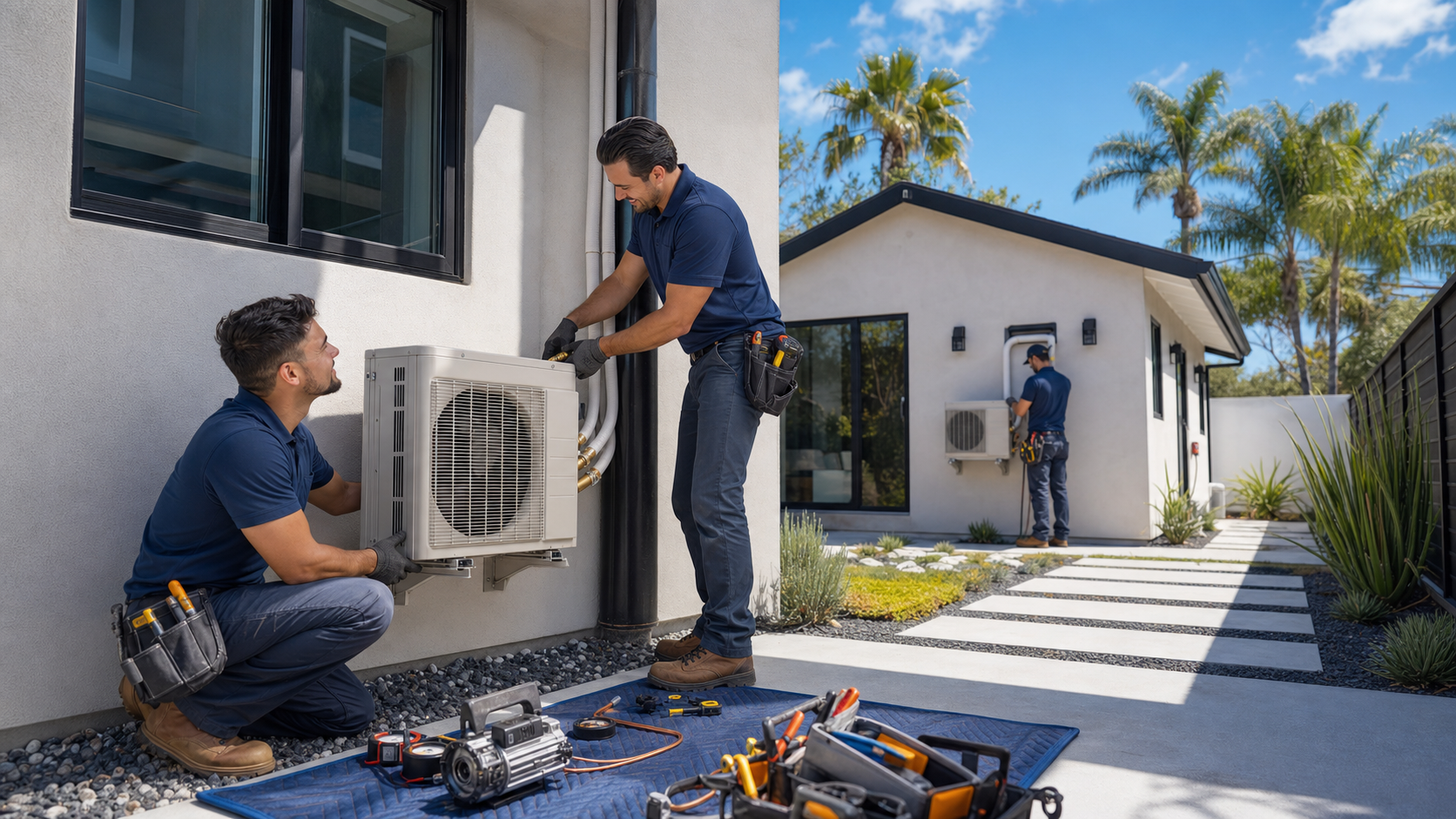
Make Your Duplex or ADU Comfortable All Year
A duplex or ADU in Los Angeles can be a great way to add living space or rental income, but comfort can be tricky. Many of these homes are added in backyards, above garages, or inside older buildings that were never planned for modern HVAC. The result is common: hot, stuffy rooms, AC that never shuts off, and energy bills that keep creeping up.
HVAC installation in Los Angeles is not one-size-fits-all, especially when you are working with shared walls, tight setbacks, and small floor plans. A system that works fine in a single-family home can struggle in a duplex or ADU with different sun exposure and mixed use. A smart plan up front is what separates a smooth project from a home that never quite feels right.
We work every day with duplexes and ADUs across Los Angeles, Ventura, and Orange Counties, and we see the same pattern. Owners wait until June heat hits, rush to install whatever is available, then fight breakdowns during summer peak. Planning now for the right HVAC system means fewer emergencies, better comfort, and a setup that fits how each unit is really used.
Start with a Smart HVAC Plan for Your Property
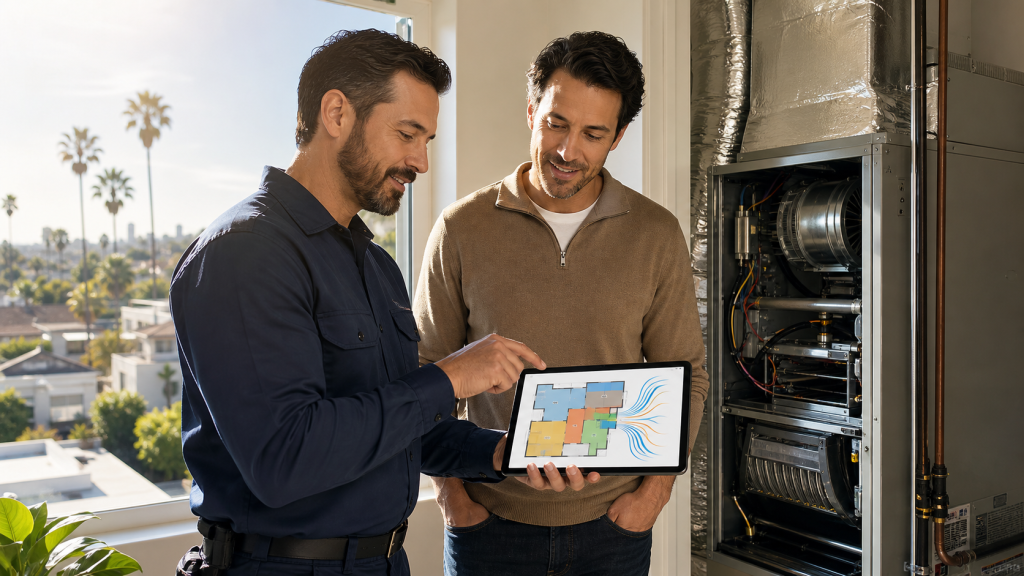
The first step is not picking equipment; it is understanding the building. Duplexes and ADUs almost always need a custom load calculation, not a guess based on square footage. Two units with the same size can need very different capacity because of:
- Different sun exposure on each side of the building
- Shared or uninsulated walls
- Window type and shading
- Existing ductwork or the lack of it
A careful load calculation shows how much heating and cooling each space actually needs. Oversized systems short-cycle and leave rooms sticky, and undersized systems just run and run without catching up.
Owners of duplexes and lots with multiple ADUs also need to think through zoning early. Some common options are:
- Separate systems for each unit, giving full control and cleaner utility splits
- One shared system with zoning controls that direct air where it is needed
- Hybrid setups where a main house keeps its own system and ADUs use ductless units
The right path depends on how you use the property, whether you live on-site, and how you handle utilities with tenants. Good zoning helps with comfort, but it also helps avoid fights over thermostats.
Before we ever suggest a system, we look carefully at the structure. That includes:
- Access points for equipment and ducts
- Attic height, crawl space conditions, or the lack of those spaces
- Electrical capacity for new HVAC loads
- Local code rules for clearances, venting, and condensers
Doing this early avoids mid-project surprises like a breaker panel that cannot handle a heat pump or an attic that will not fit standard duct runs.
Choosing the Right HVAC System for Duplex and ADU Homes
Once the plan is clear, then it is time to match system type to the property. For HVAC installation in Los Angeles duplexes and ADUs, we usually compare a few common setups.
Central split systems can be a good fit when there is room for ducts and a central return. Pros are familiar controls, hidden ductwork, and even air distribution when designed correctly. Cons show up in small or chopped-up spaces, where ducts are hard to run without losing precious storage or ceiling height.
Ductless mini-splits are popular for ADUs and tight duplex layouts. They offer:
- No bulky ducts
- Independent control for each room or zone
- High efficiency in many models
The tradeoff is that indoor heads are visible on walls or ceilings, so placement and look matter. For many owners, the comfort and flexibility are worth it.
Heat pumps, both ducted and ductless, are a strong choice in our warm climate. A single system can handle both cooling and heating, and many modern units are very efficient at typical local temperatures. Hybrid setups that combine traditional equipment with heat pump tech can also work where there are existing systems that still have life left.
Brand and equipment choices matter too, but not just for the name on the box. We help owners weigh:
- Efficiency ratings
- Reliability track record
- Warranty support
- Parts availability in our area
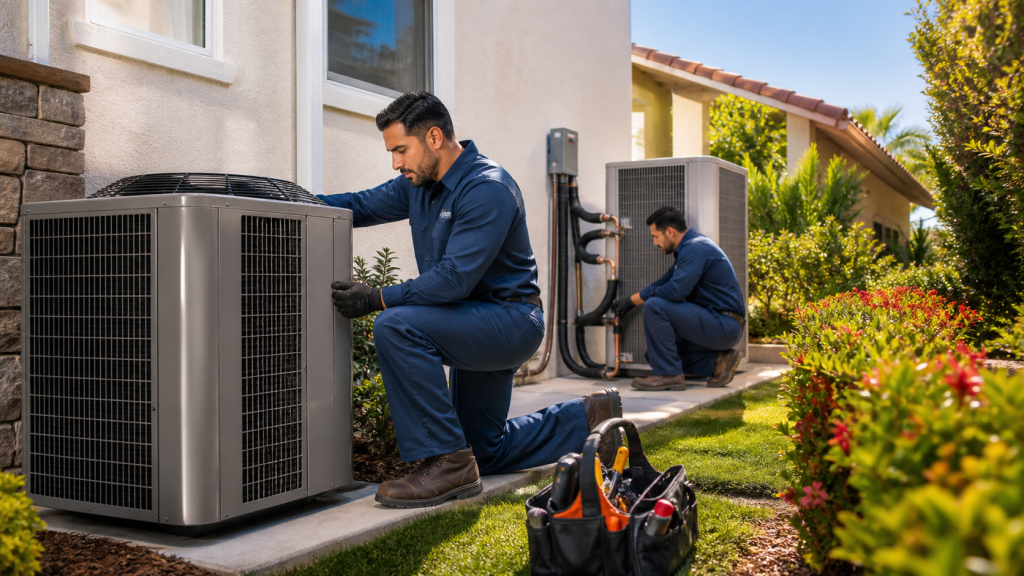
Design details make a big difference in attached homes. Quiet outdoor condensers keep peace between neighbors. Discreet indoor units and compact air handlers fit where space is tight. Properly sized return air and well-placed supply vents help avoid that common problem where one side of the duplex is freezing while the other side is still stuffy.
Maximize Energy Efficiency and Indoor Air Quality
Every added ADU or finished duplex unit means more conditioned space pulling power from the same meter. In Los Angeles, that can add up quickly if the system is not efficient. High-SEER heat pumps and variable-speed systems can help smooth out power use, avoid spikes, and keep rooms comfortable even during long hot afternoons.
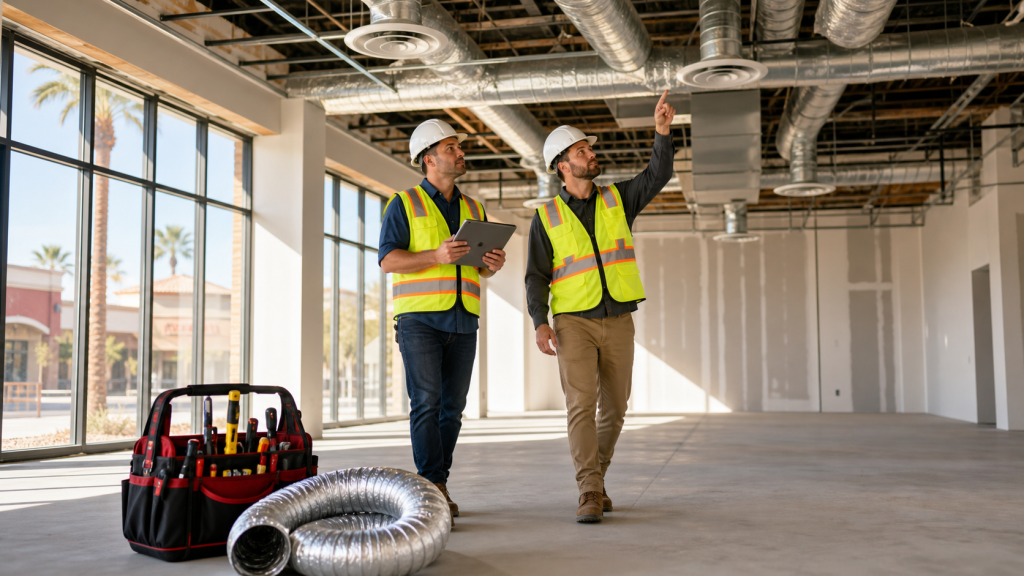
Ductwork is a big part of this. Even the best equipment will struggle if ducts are leaking or poorly sized. For duplexes and ADUs, we pay special attention to:
- Sealing and insulating existing ducts in older buildings
- Designing short, direct duct runs for new ADUs
- Avoiding undersized ducts that choke airflow and strain equipment
Indoor air quality also matters when more people live closer together. Proper filtration and return air sizing help remove dust and keep air moving so it does not feel stale. This is especially important in units that share walls and ceilings where cooking smells and everyday odors can linger.
Smart thermostats and zoning controls are useful tools, but they are not magic on their own. When paired with a well-designed system, they help:
- Manage separate units from one place
- Track general energy use patterns
- Keep tenants from setting the AC extremely low for long periods
The key is correct setup and integration so the controls match the actual system design.
Repair, Replacement, and Timing Your Summer Upgrade
Many older duplexes and homes with added ADUs have patchwork HVAC. A small unit was tacked on for the back apartment, or the main house system was stretched to cover a new ADU, even though it was never sized for that. Over time, this can lead to:
- Uneven cooling between units
- Systems that run non-stop on hot days
- Repeat repair visits for the same problems
Knowing when to repair and when to replace is a common question. Some signs that it may be time to think about replacement or a new configuration include:
- Frequent repairs in a short period
- Rising utility bills even though usage is the same
- Hot or cold spots that never go away
- Equipment age reaching the typical upper range of service life
Phased upgrades can help spread out the investment. For example, you might start with the most stressed unit or the one that causes the most comfort complaints, then plan to update the remaining systems over time.
Timing matters too. Planning HVAC installation in Los Angeles before summer peak usually means:
- More flexible scheduling
- Less pressure to decide in a hurry
- Time to review options calmly and choose what really fits your property
When heat waves hit and systems fail, choices shrink to whatever is in stock right now. A little planning ahead can keep you out of that rush and leave both units on your property cool and comfortable all season.
Get Started With Your Project Today
If you are ready for dependable comfort in every season, our team at Best HVAC LA is here to help you plan the ideal HVAC installation in Los Angeles for your home. We will evaluate your space, explain your options clearly, and recommend solutions that fit your budget and efficiency goals. Reach out today through our contact page so we can schedule a convenient time to get your project underway.