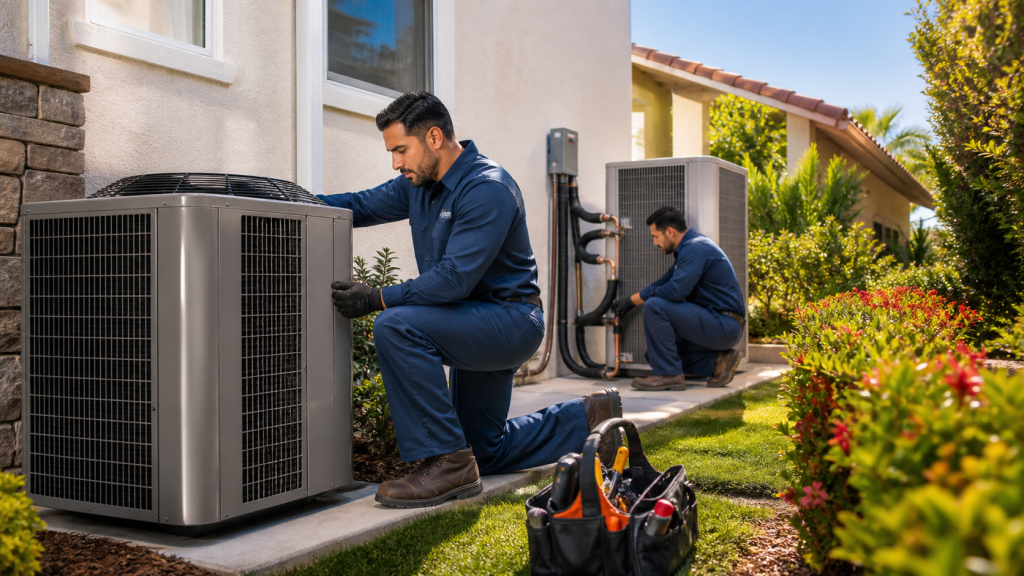
Start Strong with a Smart HVAC Game Plan
A hot Anaheim afternoon is the worst time to start guessing about your AC. When the heat is up and everyone is running their systems hard, small mistakes in planning turn into big comfort problems. If you rush decisions or pick a system based only on price, you can end up with rooms that never feel right and a unit that runs nonstop.
A better path is simple: a prepared homeowner plus a qualified residential HVAC contractor in Anaheim. When you get ready before the visit, your contractor can understand your home faster, ask better questions, and design a system that actually fits how you live. We will walk through two big pieces: how to prep before the contractor arrives and how to compare proposals so you can choose with confidence.
Get Your Home and Info Ready Before the Visit
Before your appointment, a little homework goes a long way. Start with your utility bills. Gather at least 12 months of electric and gas bills and have them ready to share. This history shows how your home really behaves over the year, where your peak usage is, and how big your cooling load might be when the sun is strongest.
With those bills, many contractors can:
- Spot patterns and sudden spikes
- See how hard your current system is working
- Estimate possible savings from a more efficient setup
Next, make a simple comfort and performance log. Grab a notepad or your phone and write down what you feel, not just what the thermostat says. Pay attention to:
- Rooms that stay hotter or cooler than the rest
- Vents with weak or noisy airflow
- Any musty, stuffy, or overly dry areas
- Times when the system cycles on and off too often
Note the time of day and what the weather was like. This helps your contractor match symptoms to design issues, like poor duct runs or an oversized unit.
Finally, prepare basic access and home facts. Clear a path to:
- Your indoor unit or furnace
- The outdoor condenser
- The electrical panel
- Attic and any crawlspaces
Have a few details ready, such as the square footage of your home, its age, any previous HVAC or electrical work, and whether you have upgraded insulation or windows. All of this gives your contractor a quick baseline so the visit can focus on solutions, not guesswork.
Room-by-Room Checklist to Guide Your Contractor
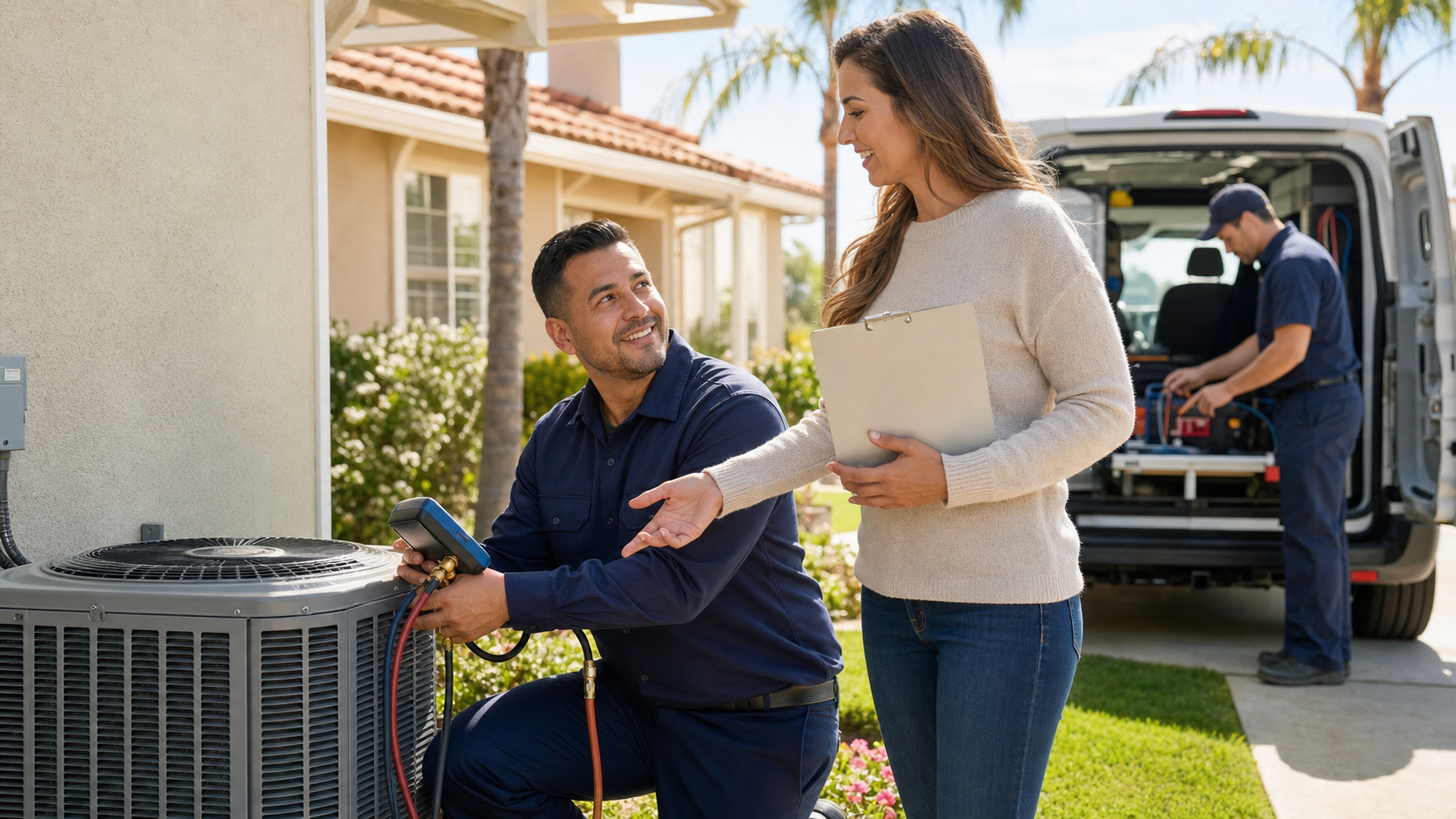
A walk-through with your contractor should feel like a guided tour of how you use your house, not just a quick peek at the equipment. Go room by room and share what you feel in each space. For every room, talk about:
- Temperature comfort: too hot or too cool
- Airflow strength at each vent
- Noise from the system or ducts
- How you actually use the space
For example, a home office needs quiet and steady comfort during the day, while a guest room might only need light cooling a few times a year. A nursery or home gym may need more precise control. Sharing this helps your contractor think about zoning, duct layout, and control options.
Also talk about future plans and lifestyle changes. Are you thinking about:
- A room addition or second-story build
- Turning the garage into a living space or studio
- Adding an ADU in the backyard
- Having more people live in the home or more work-from-home hours
These changes can affect how much cooling and airflow your home will need later, not just right now. A smart contractor can size and design the system with these plans in mind so you are not stuck with a setup that is too small in a few years.
Last, look at vents, returns, and controls. Point out places where supply or return registers seem wrong, missing, or blocked by furniture. Talk about whether you like having one main system or could benefit from multiple systems. Discuss good thermostat locations, away from direct sun, ovens, and drafty doors, so the readings match how the space actually feels.
How to Choose the Right Residential HVAC Contractor in Anaheim
When you are picking a residential HVAC contractor in Anaheim, price alone should not be the first filter. You want someone who is licensed, insured, and familiar with local codes and permits. Experience with homes in Anaheim and surrounding areas helps too, since many neighborhoods share similar construction styles and duct layouts.
Ask clear questions about how they design systems. They should be comfortable talking about:
- Manual J for heat and cooling load calculations
- Manual S for equipment selection
- Manual D for duct design and sizing
If someone says they size equipment only by square footage or a quick “rule of thumb,” that is a warning sign, especially in Southern California where sun exposure, insulation, and window area really matter.
Also ask if they look at your home as a whole system, not just the box that sits outside or in the closet. A good contractor will:
- Inspect existing ducts for layout, size, and condition
- Pay attention to insulation levels in the attic
- Confirm electrical capacity for new equipment
This kind of full-system check often leads to quieter operation, better comfort in every room, and lower energy use over time.
Reading Contractor Proposals Like an Expert
Once you have a few proposals, the pages can look confusing. Start by checking for Manual J, S, and D proof. You do not have to be an engineer, but you should see:
- Your home’s basic data, like square footage and construction type
- Design temperatures for cooling and heating loads
- Room-by-room load numbers, not just one total
- Proposed duct sizes and layouts
This shows the contractor took real measurements and did proper calculations. Right-sized equipment reduces short cycling, helps with humidity control, and gives you smoother comfort.
Next, look at equipment matching and efficiency. Each proposal should list exact model numbers for:
- Outdoor unit
- Indoor coil
- Furnace or air handler
- Thermostat or controls if included
When these parts are matched correctly, the system can reach its rated SEER2, EER2, or HSPF performance levels. Proper matches can also help with many rebate programs and usually lead to lower power bills.
Then compare scope, not just the bottom-line number. Make sure each proposal clearly spells out:
- Ductwork repairs or redesign, including new returns
- Line set work or replacement
- Condensate drain solutions and safety switches
- Thermostat or control upgrades
- Any code-required electrical or safety upgrades
A cheap “unit only” swap that ignores ducts and code items might cost you more later with hot rooms, noise, and extra service calls.
Duct Leakage, Testing, Permits, and Long-Term Protection
Duct leakage is one of the biggest hidden energy problems in many homes. When your ducts leak into the attic, garage, or walls, you are paying to cool spaces you do not live in. That leads to higher bills and rooms that never seem to reach the set temperature.
Ask each contractor how they handle ducts. Strong proposals often include:
- Duct leakage testing before work to find problems
- Sealing or replacing leaky runs
- Follow-up testing after the job to confirm improvement
This testing gives you proof that the air you pay to cool is actually reaching your living spaces.
Permits and inspections are another key part of a quality install. In Anaheim, HVAC work usually needs a permit and one or more inspections from the local building department. A professional contractor should:
- Pull the correct permits in their name
- Provide any needed plans or documentation
- Coordinate inspections and explain the general timeline
Proper permits help make sure the system meets current codes for things like clearances, electrical safety, combustion air for gas equipment, and refrigerant handling. This protects your home and can prevent headaches if you sell or refinance, since unpermitted work may need to be corrected later.
Turn Your Checklist Into a Confident HVAC Decision
When you take time to gather utility bills, write down comfort issues, and walk room by room, you give your contractor the information needed to design a system that fits your home instead of forcing your home to fit the system. The result is usually better comfort, fewer surprises during install day, and a setup that keeps working smoothly over the long haul.
Using those same notes to compare proposals, and checking for real Manual J, S, and D documentation, matched equipment, duct testing, and a clear permitting plan, helps you pick a residential HVAC contractor in Anaheim based on quality and long-term value not just the fastest or lowest offer. With a solid plan and the right partner, your next HVAC system can feel less like a gamble and more like a smart upgrade for your home.
Get Started With Your Project Today
If you are ready to improve the comfort and efficiency of your home, our team at Best HVAC LA is here to help. As a trusted residential HVAC contractor in Anaheim, we provide tailored solutions that fit your space, budget, and long-term needs. Tell us about your project, and we will walk you through your best options and next steps. To schedule service or request a quote, simply contact us today.