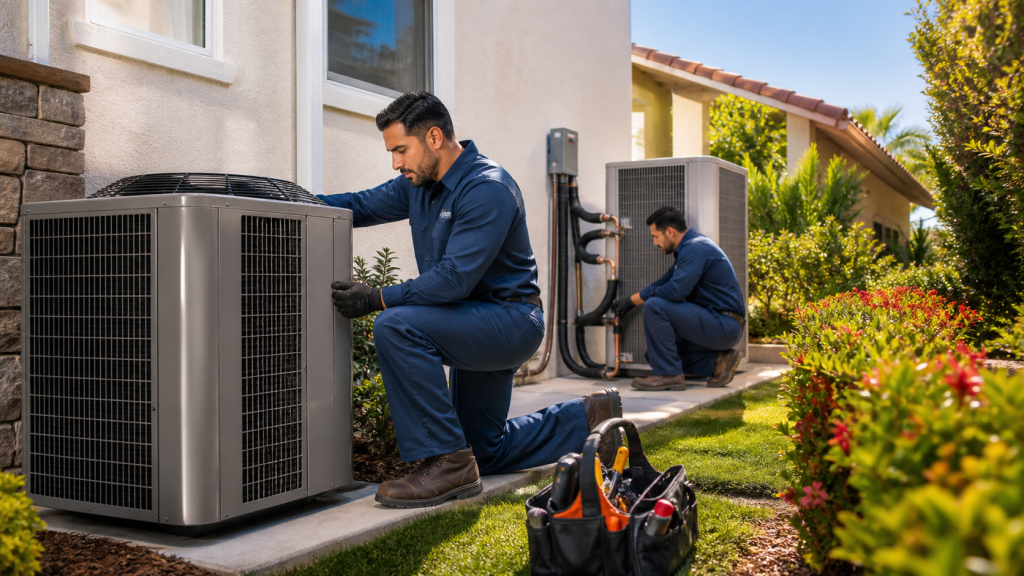

Your HVAC system does a lot of quiet work in your home. In a place like Anaheim, it has to cool your house through long, hot spells and still handle cooler, damp nights without wasting energy or breaking down when you need it most. Choosing the right residential HVAC contractor in Anaheim is a big part of keeping that comfort steady and simple.
We want to walk through how to plan the right system for this mixed climate, what matters on installation day, and how to think about repairs, upgrades, and maintenance. When you know what to look for, it is much easier to pick a contractor who will keep your home comfortable all year.
Anaheim’s Mixed Climate and Why Your Contractor Matters
Anaheim does not just have “summer” and “not summer.” We see long, hot, dry stretches, cooler damp evenings, and surprise heat waves even in the middle of fall. Your AC might be working hard most of the year, then your heater kicks on during a few cooler nights.
That pattern puts special pressure on home HVAC systems. They need to:
- Cool well for long periods without running nonstop
- Handle cooler nights without making rooms feel stuffy
- Adjust to big swings between daytime and nighttime temperatures
A good residential HVAC contractor in Anaheim understands this mix. The goal is not just to drop the temperature. It is to design, install, repair, and maintain a system that feels good in July heat and also keeps the house steady and comfortable when nights are cooler and damp.
Planning Your System for Anaheim, Not Just Today’s Weather
Good HVAC work starts before any tools come out of the truck. Planning matters a lot in a mixed climate like ours. Your system has to be strong enough for long cooling seasons, but not so big that it short cycles and leaves the air sticky or uneven.
A careful contractor should:
- Do a load calculation, often called Manual J
- Look at square footage and ceiling height
- Check insulation, window size, direction, and shade
- Inspect ducts, vents, and existing equipment
We should also talk with you about:
- Hot and cold spots, like warm upstairs bedrooms
- Noise from your current system
- High energy bills in past summers
- Future changes, such as room additions, ADUs, or home offices
Those details help decide if you need central AC with a furnace, a heat pump that handles both cooling and heating, or ductless mini-splits for certain rooms. Planning in late spring or early summer often works well, since you can be ready before the biggest heat waves and have more flexible scheduling.
Installation Details That Make or Break Comfort
Even the best brand will not feel good if the system is installed the wrong way. In many Anaheim homes, we see older ductwork, added rooms that never got proper vents, or converted garages and ADUs that were simply tied into an overloaded system.
A careful installation should include:
- Correct equipment sizing, matching the load calculation
- Proper refrigerant charge so the AC cools as designed
- Sealed and balanced ductwork, not leaky or undersized
- Smart return-air placement so air flows smoothly
- Safe venting for any gas furnace components
You should also expect a clear process, such as:
- A written project plan and timeline
- Handling of permits and code requirements
- Protection of floors, walls, and furniture while we work
- Full system startup testing and air balancing
- A walkthrough so you know how to run and care for your new system
We focus strongly on code-compliant installations, careful duct inspections, and full system commissioning. That way your home is ready for those long July and August days and still feels comfortable during cooler nights.
Choosing Equipment, Efficiency, and Supporting Options
Once planning is done, you still need to choose the right type of equipment. In Anaheim, common options for homes include:
- High-efficiency central AC with a gas furnace
- Heat pumps that provide both cooling and heating in one system
- Ductless mini-splits for additions, upstairs rooms, or homes without ducts
Efficiency ratings matter a lot during long cooling seasons. You will see:
- SEER2 for cooling efficiency
- AFUE for furnace efficiency
Higher ratings can lower energy use, but they often come with higher upfront costs. A good residential HVAC contractor in Anaheim will walk you through what those ratings mean for your house, your utility usage, and your comfort, instead of pushing one model.
We also talk about supporting pieces, like:
- Smart thermostats for better scheduling and remote control
- Filters that help with dust and common indoor pollutants
- Optional indoor air quality add-ons if they make sense for your home
Utility companies often offer rebates for higher efficiency systems or smart controls, especially in the middle or later part of summer. We help homeowners understand what is available and how those programs might apply to their upgrade plans.
Repair, Replace, and Maintain Before Peak Use
Many homeowners are not sure when to keep repairing an older system and when to replace it. Some signs that it might be time to think about a new system include:
- The unit is getting older
- Breakdowns or service calls are happening more often
- Certain rooms never feel comfortable
- Bills have climbed even though your use has not changed much
A simple rule of thumb is that older systems with major repairs coming up may be better to replace, while newer systems often benefit most from focused repairs and regular maintenance. In Anaheim, it helps to make these decisions in early summer or early fall, before the hottest stretches or busy holiday periods, so you can avoid emergency breakdowns.
A trustworthy contractor will:
- Do a full diagnosis, not just guess
- Explain what they find in clear, simple terms
- Compare repair versus replacement options side by side
- Give realistic expectations about how long older equipment may last
Regular tune-ups are also important. When systems run for long hours through hot months, seasonal maintenance can help keep them efficient, reduce surprise failures, and support a longer working life.
How to Choose the Right Anaheim HVAC Contractor
Picking the right residential HVAC contractor in Anaheim is just as important as picking the right equipment. Some basic qualifications to look for are:
- A current California state license
- Proper insurance coverage
- Technicians trained to handle refrigerant safely
- Experience with residential and light commercial systems in local cities
It is smart to ask questions such as:
- Do you perform load calculations when sizing equipment?
- How will you check my ducts and vents?
- What brands do you recommend and why?
- How do you handle permits and inspections?
- What warranties do you offer on labor and parts?
Watch out for red flags like very low bids with no detail, pressure to decide on the spot, or someone who does not want to inspect your current system or ducts. Local experience matters too, since Anaheim homes often share issues like hot upstairs rooms, ADUs added later, and long cooling seasons.
At Best HVAC LA, we are a licensed residential and commercial HVAC contractor serving Anaheim and nearby communities in Los Angeles, Ventura, and Orange Counties. We focus on planning, installation, repair, and maintenance that fit Southern California homes and this mixed, warm climate so your system works smoothly all year.
Get Started With Your Project Today
If you are looking for a trusted residential HVAC contractor in Anaheim, we are ready to help you improve the comfort and efficiency of your home. At Best HVAC LA, our team will assess your system, explain your options clearly, and recommend solutions that fit your space and budget. Reach out to us today through our contact page and schedule a convenient time for your service or consultation.