
Boiler Maintenance 101: How to Keep Your Hot Water Flowing Efficiently All Year
Your boiler plays a critical role in keeping your home warm and your hot water running reliably. Whether you rely on it for radiant heating, baseboard heat, or domestic hot water, proper maintenance is essential for efficiency, safety, and longevity.
In this complete guide, you will learn how boiler systems work, why routine maintenance matters, and what steps you can take to keep your system performing at its best.
How a Boiler System Works
Unlike forced air systems, boilers heat water and distribute it through pipes to radiators, baseboards, or in floor heating systems. Some systems also provide hot water for sinks and showers.
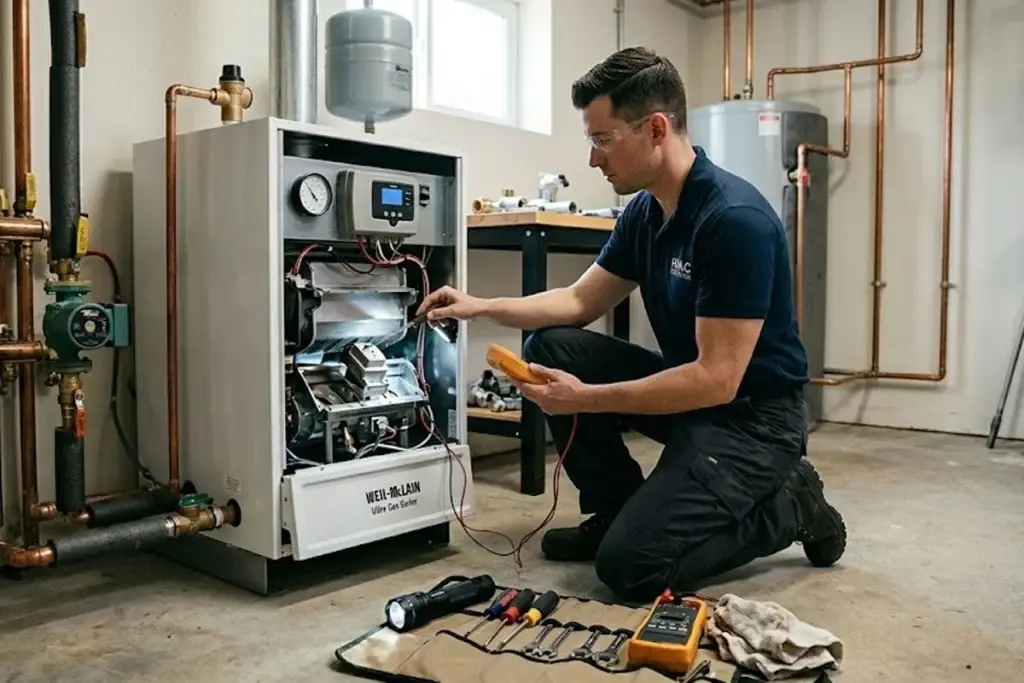
Major components typically include:
- Burner and heat exchanger
- Circulator pump
- Expansion tank
- Pressure relief valve
- Thermostat and control system
Modern systems from manufacturers like Weil-McLain, Navien, and Burnham Commercial are designed for high efficiency, but even the best equipment requires regular care.
Why Boiler Maintenance Matters
Skipping maintenance can lead to:
- Reduced heating performance
- Higher energy bills
- Inconsistent hot water supply
- Strange noises from pipes or radiators
- Shortened system lifespan
- Safety risks such as carbon monoxide leaks
Routine maintenance helps ensure consistent heat and dependable hot water throughout the year.
Key Benefits of Regular Boiler Maintenance
1. Improved Energy Efficiency
Over time, sediment buildup and dirty components force your boiler to work harder. A properly cleaned and tuned system runs more efficiently, which lowers energy consumption and monthly utility costs.
2. Reliable Hot Water Supply
Mineral buildup inside the heat exchanger can reduce hot water output. Maintenance ensures your system heats water evenly and maintains steady pressure.
3. Longer Equipment Lifespan
Boilers are a major investment. Routine inspections and minor adjustments help prevent small issues from turning into major system failures.
4. Increased Safety
A professional inspection checks for gas leaks, faulty pressure valves, and ventilation problems. Early detection protects your home and family.
Basic Homeowner Maintenance Tips
While annual professional servicing is essential, homeowners can take simple steps to support system health.
Check Boiler Pressure
Most residential boilers operate between 12 and 15 PSI when cold. If pressure is too low or too high, contact a professional for adjustment.
Bleed Radiators
If you hear gurgling sounds or notice cold spots on radiators, trapped air may be the cause. Bleeding radiators helps restore proper heat circulation.
Inspect for Leaks
Regularly check around the unit and connected pipes for moisture or corrosion. Small leaks can lead to major damage if ignored.
Keep the Area Clear
Ensure the space around your boiler is free from clutter. Proper airflow supports safe operation and allows easy access for servicing.
Professional Boiler Maintenance Checklist
During an annual service visit, a licensed technician will typically:
- Inspect and clean the burner assembly
- Check the heat exchanger for cracks or corrosion
- Test pressure relief valves
- Examine venting and flue systems
- Check expansion tank function
- Verify thermostat calibration
- Test safety controls
Professional servicing ensures your system meets safety standards and runs at peak performance.
Signs Your Boiler Needs Immediate Attention
Call a professional if you notice:
- No heat or no hot water
- Unusual banging or whistling sounds
- Water leaks around the unit
- Rapid pressure fluctuations
- Pilot light repeatedly going out
- Rising energy bills without increased usage
Ignoring warning signs can lead to emergency repairs or full system replacement.
How Often Should You Service Your Boiler?
Most manufacturers recommend professional maintenance once per year. Ideally, schedule service before the heating season begins to avoid unexpected breakdowns during colder months.
Consistent annual maintenance keeps your warranty valid and helps ensure reliable performance.
Common Boiler Problems Prevented by Maintenance
Routine servicing helps prevent:
- Circulator pump failure
- Heat exchanger damage
- Sediment buildup
- Ignition issues
- Thermostat malfunctions
- Carbon monoxide hazards
Prevention is always more affordable than emergency repair.
The Bottom Line
Your boiler is the heart of your home’s heating and hot water system. With proper maintenance, it can provide dependable comfort for many years.
Regular inspections, simple homeowner checks, and annual professional servicing ensure:
- Efficient operation
- Consistent hot water
- Lower energy costs
- Safe performance
- Extended system life
If you want uninterrupted heat and reliable hot water, boiler maintenance is not optional. It is essential.
Invest in routine care today and enjoy comfort, efficiency, and peace of mind all year long.