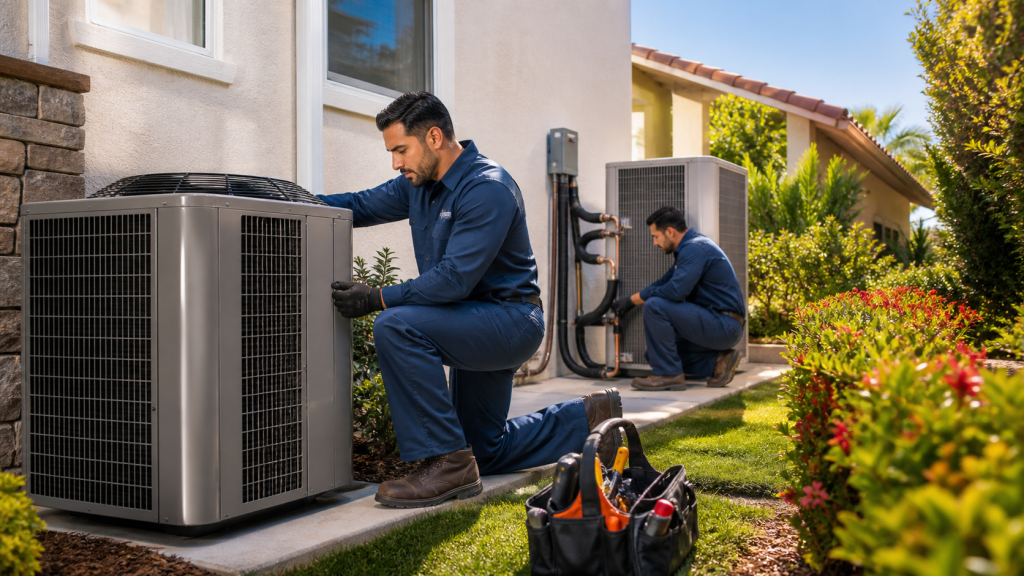
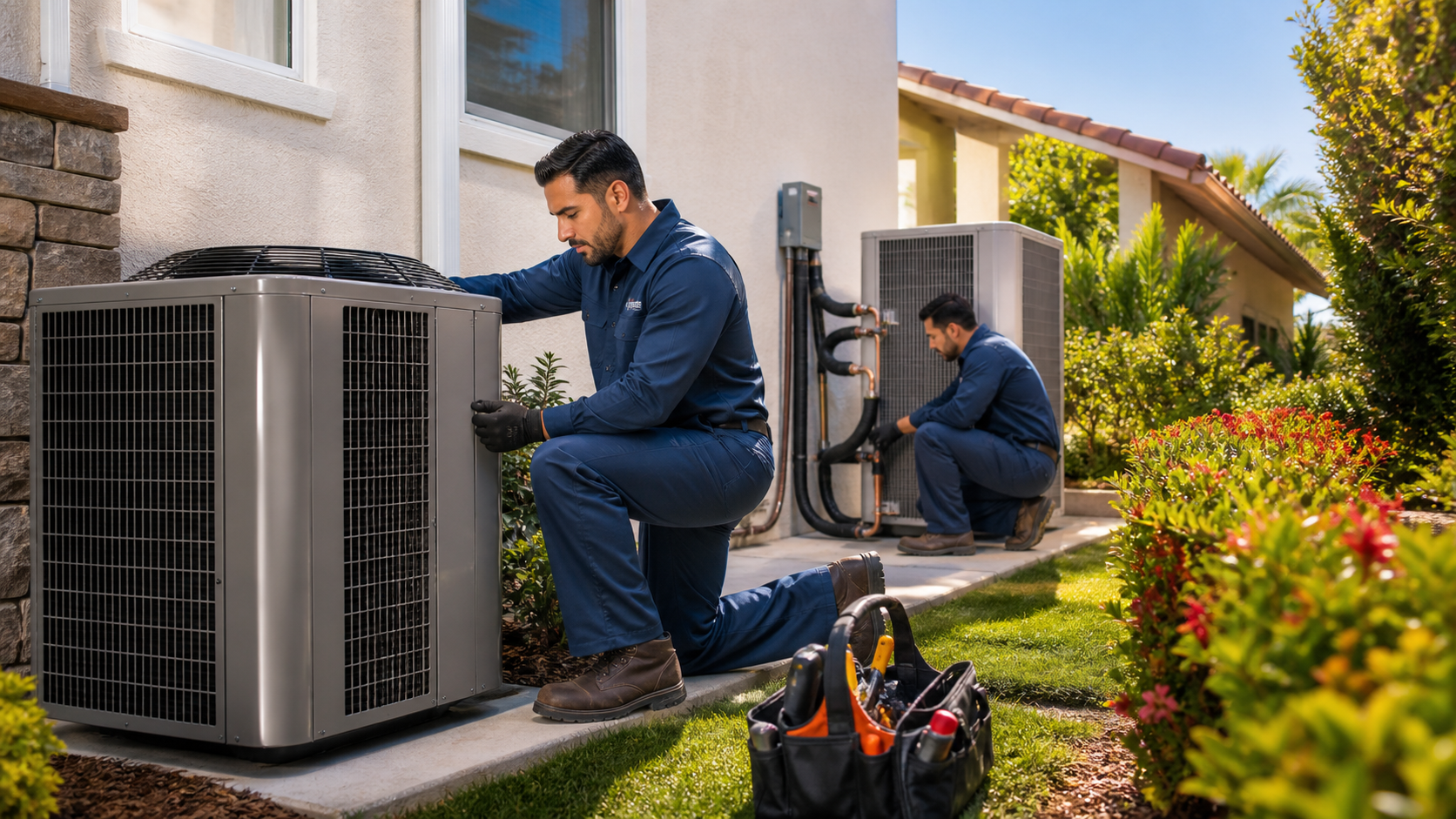
Maximize Summer Comfort with a Pro Heat Pump Tune-up
A solid HVAC tune-up in Anaheim keeps your heat pump or dual-fuel system ready for the longest, hottest days. August is a great time to get this done, before late-summer heat really pushes your system and before you start leaning more on the heating side during cooler nights. You get ahead of problems, not chase them after something breaks.
A real tune-up is more than a quick look and a filter change. For heat pumps and dual-fuel systems, it should include testing, measuring, small adjustments, and minor corrective work that supports comfort and efficiency. It is about how the system performs, not just how it looks.
We work with homeowners and property managers across Anaheim and nearby cities, and we see how much smoother things go when heat pump-only and dual-fuel systems get the right kind of attention. In this guide, we will walk through what to ask your HVAC tech to do, which extras are usually smart, which ones to question, and how to confirm your system is actually running better when the tune-up is done.
What a Proper Anaheim HVAC Tune-up Should Always Include
For an HVAC tune-up in Anaheim to be worth your time, your contractor should test how the system is really working, not just wipe it down and leave. Core system testing should include:
- Measuring supply and return air temperatures to check the temperature split
- Checking static pressure and airflow to see if the blower and ducts are moving the right amount of air
- Verifying refrigerant charge on heat pumps by comparing readings to manufacturer specs
For heat pumps and dual-fuel systems, performance in both heating and cooling modes matters. When conditions allow, your tech should:
- Test cooling performance for strong, steady temperature drop across the indoor coil
- Confirm heating performance so the heat pump side is ready when you need it
- Make sure the system can switch modes cleanly without odd noises or long delays
Electrical and safety checks protect your equipment and your property. A thorough tune-up should include inspection and tightening of electrical connections and testing of capacitors, contactors, and relays for safe amperage draw. Your tech should also:
- Verify defrost control works properly on the heat pump
- Test safety controls on any dual-fuel furnace side, like limit switches and flame sensors
- Confirm breaker sizing and that indoor and outdoor disconnects are secure and labeled
Controls and airflow are where comfort often lives or dies. During a tune-up, we like to:
- Review thermostat settings and staging
- Check how the heat pump and gas furnace hand off in a dual-fuel setup
- Inspect blower wheel, indoor coil, and ducts for dirt and restrictions
Minor airflow adjustments, like damper tweaks or fan speed changes where the equipment allows, can help smooth out hot and cool spots in the home or building.
Smart Add-Ons to Approve and Common Upsells to Skip
Not every extra service is a bad idea. Some add-ons during a tune-up can bring real value, especially in a warm climate where systems run a lot.
Services that are usually worth saying yes to when needed:
- Coil cleaning if indoor or outdoor coils are visibly dirty or testing shows low capacity
- Blower assembly cleaning when dust buildup is affecting airflow or causing noise
- Duct sealing or targeted duct repairs when static pressure or inspection shows clear leakage or crushed sections
These steps help the system move air more easily and keep the compressor and blower from working harder than they should.
Some items are optional and depend on what we find:
- Filter upgrades or media filter cabinets when the current setup restricts airflow or is clearly undersized
- Thermostat upgrades to smart or communicating models, but only if they match your specific heat pump or dual-fuel equipment
- Surge protectors or hard-start kits when equipment age, past electrical issues, or manufacturer guidance suggest they are a good idea
There are also upsells that you should question or delay:
- Generic “lifetime” duct cleaning when ducts look fairly clean and there are no signs of contamination or heavy dust buildup
- Non-specific “efficiency boosters” or chemical additives that do not have clear manufacturer support or measurable data
- Refrigerant “top-offs” without a documented leak check and verified low charge compared to factory specs
If something sounds vague, ask how it will be measured before and after. If the answer is fuzzy, it may not be worth it.
How to Verify Real Performance Gains After a Tune-up
You do not need special tools to see if your HVAC tune-up in Anaheim actually helped. There are simple checks you can do before and after the visit.
Helpful steps for homeowners and managers:
- Record indoor and outdoor temperatures plus a quick reading of supply and return air at a main register and a return grille
- Note how long your system runs to reach setpoint during similar weather before and after the tune-up
- Watch how often the system stops and starts and track your energy use and thermostat patterns over the next few weeks
Your HVAC contractor should also share key data from the tune-up. Ask for:
- Before-and-after readings for static pressure, temperature split, and refrigerant superheat or subcool where it applies
- A written checklist of what was done, matched to your specific heat pump or dual-fuel model
- A simple list of recommendations, broken into immediate repairs, near-term upgrades, and longer-term planning
If performance still does not feel right, even after a good tune-up, it can point to deeper issues. Signs include rooms that never stay comfortable, short cycling, very long run times, or noise that does not match the size or style of your home.
At that point, it may be time to talk about whether the equipment is undersized, oversized, or nearing the end of its useful life. You can also look at duct changes, zoning, or a different capacity or style of heat pump or dual-fuel system. The readings from your tune-up can serve as a baseline for planning a future system with higher efficiency ratings and better comfort controls.
Planning Ahead: Repair, Replacement, and Dual-Fuel Strategy
A detailed tune-up can reveal when you should start planning for a new system instead of just another repair. When we review a system, we look at:
- Age and condition of the equipment
- History of breakdowns or repeat issues
- Current efficiency ratings compared to your energy use patterns
If replacement is on the horizon, you have choices. You might:
- Stay with a standard heat pump that fits your budget and needs
- Upgrade to an inverter-style heat pump that can modulate capacity for smoother comfort
- Choose a dual-fuel setup that pairs a heat pump with a gas furnace for flexible operation
Key installation questions include existing gas availability, electric panel capacity, and duct condition. These are things we can assess during a tune-up visit so you are not guessing later.
Good planning for a new system should always include:
- Proper load calculations, not just swapping “same size” equipment
- A review of brands and models that balance reliability, warranty, and serviceability
- A look at line sets, condensate handling, thermostat compatibility, and any required code updates
Once your system is in place and tuned, an ongoing maintenance plan keeps it running smoothly. Regular service supports performance and can help keep manufacturer warranties valid. Over time, that kind of steady care protects your comfort and helps your HVAC system handle Anaheim heat day after day.
Schedule Your HVAC Tune-Up Today For Reliable Comfort
If you are ready to prevent breakdowns and keep your system running efficiently, schedule your HVAC tune-up in Anaheim with Best HVAC LA today. Our technicians will inspect, clean, and optimize your equipment so you can rely on steady comfort in every season. To set up an appointment or ask a question, simply contact us and we will help you find a time that works for your schedule.