
Get the HVAC Performance You Paid For
A brand-new HVAC system should feel like a big upgrade. The air should feel steady and clean, the temperature should stay where you set it, and the system should run without strange noises. That only happens when the installer takes time to test and fine-tune the system right after installation.
This step is called commissioning. In simple terms, commissioning is a careful checkup for your new system. We test the air pressure, airflow, and refrigerant charge, then adjust settings so everything matches your home or building, your ductwork, and the way the space is used. For any HVAC installation in Los Angeles, this is not a fancy add-on. It is the last, important piece that affects comfort, energy use, and how long the equipment will last.
Why Commissioning Matters in LA, Ventura, and Orange County
Our local area has long cooling seasons, heat waves, traffic pollution, and plenty of sunny afternoons. Systems here work hard almost all year, especially on the cooling side. If a new system is not commissioned, it might run, but it may not run right.
Skipping commissioning can lead to problems like:
- Hot and cold spots in different rooms
- Noisy supply grilles and whistling return air
- Sticky, humid indoor air even when the AC is on
- Short cycling, where the system starts and stops too often
- Higher electric bills than expected
- Stress on the compressor and blower that can shorten equipment life
For homes and commercial buildings, it is not enough to just hook up the system and flip the switch. A professional HVAC installation in Los Angeles, Ventura, or Orange County should always include tests that confirm the equipment is working the way the manufacturer planned. That is the role of commissioning in a quality install.
Key Tests to Request After a New HVAC Installation
After a new system is installed, there are three main tests you should expect your contractor to perform and explain to you: static pressure, airflow, and refrigerant charge. These three work together to prove the system is actually delivering the heating and cooling capacity you paid for.
Here is a simple overview of each one:
- Static pressure: Shows how hard the blower has to push to move air through ducts, coils, and filters
- Airflow: Measures how much air the system is moving, usually in cubic feet per minute (CFM)
- Refrigerant charge: Confirms the right amount of refrigerant is in the system so it can move heat efficiently
These are not only for high-end systems or big commercial projects. They are basic checks that should be part of any professional HVAC installation in Los Angeles and the nearby counties. As the owner or manager, you can ask for a copy of the commissioning results. That documentation should include test numbers, any changes the tech made, and a note that the final readings are within the manufacturer’s recommended range.
Static Pressure Testing to Protect Your New System
Think of static pressure like blood pressure for your duct system. If it is too high, the blower has to strain to move air. If it is too low, the system may not move enough air to keep you comfortable. Both situations can lead to noise, hot rooms, and wasted energy.
During static pressure testing, a technician:
- Drills small test ports in the supply and return ducts
- Uses a manometer to measure pressure at those points
- Adds the readings together to get total external static pressure
- Compares that total to the maximum the equipment is rated for
If the pressure is too high, it can point to problems like undersized ducts, tight return grilles, dirty indoor coils, or filters that are too restrictive for the system. The technician may adjust ductwork, change filter types, or tweak blower settings to bring pressure back into a healthy range.
As a customer, you should ask:
- What is the rated static pressure for this unit?
- What did you measure on my system?
- Did you change any blower speeds or duct details to correct it?
Numbers that fall within the manufacturer’s guideline are a strong sign your blower is not being overworked and that the duct system is matched to the equipment.
Airflow and Refrigerant Charge Checks for Peak Cooling
Airflow comes first. Without enough air moving across the indoor coil, the refrigerant cannot absorb and move heat the way it should. If a contractor charges the system without confirming airflow, the readings can look right in the moment but still leave you with poor comfort when the weather heats up.
To check airflow, a technician may:
- Use a flow hood on selected supply grilles
- Measure static pressure and use fan tables to estimate CFM
- Adjust balancing dampers so rooms get more even air distribution
- Confirm that return paths are large and open enough
Once airflow is correct, refrigerant charge can be checked. For most systems, this means measuring superheat and subcooling with gauges and temperature probes. The tech then compares those readings to the targets for that specific model and outdoor condition. If the charge is off, they may recover or weigh in refrigerant to match the required amount.
Good refrigerant charge takes into account:
- The length and size of the refrigerant lineset
- Elevation differences between indoor and outdoor units
- The type of metering device used by the system
Getting both airflow and refrigerant charge right is key for steady cooling, lower run times, and long compressor life.
How to Verify Your System Is Truly Performing
Once commissioning is done, you should feel the difference in everyday use. You do not need special tools to sense when a system is working well. You just need to pay attention to a few simple signs.
A quick homeowner or property manager checklist:
- Indoor temperature stays close to the thermostat setting
- Most rooms feel evenly cooled or heated
- The system runs for reasonable cycles on hot afternoons instead of rapid on-off bursts
- Noise from both indoor and outdoor units sounds smooth and steady, not harsh or rattling
Ask your installer to walk you through:
- The thermostat settings and any special modes
- The nameplate data on the equipment so you know what was installed
- The blower speed settings and why they were chosen
- The static pressure, airflow, and refrigerant readings they recorded
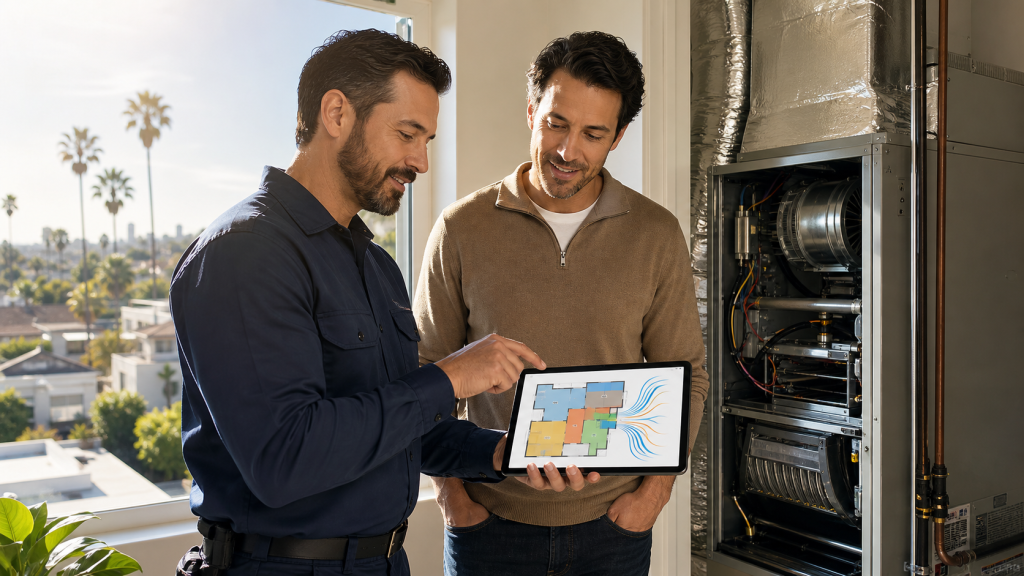
A quality contractor will be ready to show how these numbers match the design and load of your home or building. This conversation helps you feel confident that the system is set up for long-term comfort and efficiency.
Partner with Best HVAC La for a Properly Commissioned System
When you plan an HVAC installation in Los Angeles, Ventura, or Orange County, it pays to think beyond equipment size and brand. Asking about post-installation commissioning is one of the best ways to protect your comfort and your investment. Static pressure testing, airflow checks, and refrigerant charge verification are all part of making sure your new system does what it is supposed to do.
At Best HVAC LA, we focus on core HVAC services like system planning, installation, replacement, repair, and maintenance for both residential and commercial spaces. We follow industry and manufacturer guidance so the systems we install are tested, adjusted, and ready for real-world conditions in our local climate. With thorough commissioning, we can help you avoid many common comfort complaints and keep your equipment running smoothly for years.
Get Started With Your Project Today
If you are ready for a more comfortable and efficient home, our team at Best HVAC LA is here to help you plan and complete your HVAC installation in Los Angeles from start to finish. We will walk you through your options, answer your questions, and provide clear, upfront pricing before any work begins. To schedule an appointment or request a quote, simply contact us and we will follow up promptly.