
Plan the Right HVAC System First, Then Maximize Benefits with Solar
For a typical Los Angeles home, solar-powered HVAC usually means this: high-efficiency central air conditioning or a heat pump as your main comfort system, with rooftop solar panels helping supply the electricity it needs. The heart of the setup is still your HVAC system, its design, installation quality, and efficiency, while solar acts as a powerful helper to lower operating costs.
When you are thinking about comfort upgrades, it is essential to get the HVAC system right first. Once your home has a properly sized, efficient system in place, you can coordinate with a solar provider to help offset the electrical use. This approach keeps the focus on comfort, reliability, and long-term performance while allowing solar to support your energy goals.
Start with the Right HVAC System Design
Good long-term comfort planning in Los Angeles starts with solid HVAC system design. If the system is oversized, poorly installed, or low-efficiency, it will waste energy and still leave some rooms uncomfortable, whether or not you add solar later.
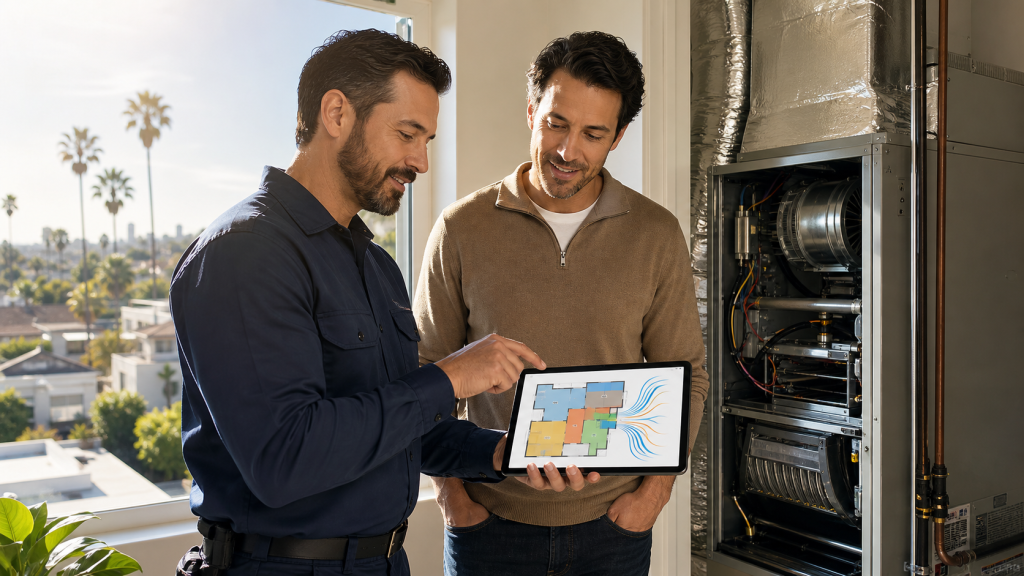
When we design a new system, we focus on how your home actually behaves, not just square footage on a listing. That often includes checking:
- Existing ductwork size, leaks, and layout
- Insulation levels in the attic and walls
- Window quality, shading, and sun exposure
- Signs of air leakage around doors, vents, and recessed lights
These details tell us how much heating and cooling your home really needs. Then we match that load to the right type of system. Common options for Los Angeles homes include:
- High-efficiency central AC with a gas furnace
- All-electric heat pump systems for both cooling and heating
- Ductless mini-splits for additions, older homes, or specific problem rooms
The type of system and its efficiency ratings, SEER2 and EER2 for cooling, HSPF2 for heat pumps, and AFUE for gas furnaces, directly affect how much electricity or gas your HVAC uses over a year. Higher efficiency usually means lower utility bills and better comfort. Once that efficient base system is in place, it becomes much easier to decide how solar might help cover part of your electrical use.
Key Installation Considerations for Long-Term HVAC Performance
A quality HVAC installation is more than just a high-efficiency label on the outdoor unit. Certain features and installation practices make your comfort system run better, last longer, and integrate smoothly with controls and later with solar, if you choose to add it.
For new or replacement systems, we often recommend:
- Variable-speed or two-stage compressors that can ramp up and down for steadier temperatures
- Efficient ECM blower motors that use less electricity while maintaining airflow
- Smart thermostats and control boards ready for scheduling, zoning, and monitoring
- Clean, labeled wiring and clear equipment layout for easier service and future upgrades
Practical details around Los Angeles homes matter, too. Many lots are tight, with limited side yard space or older roofs. Before installing, we pay attention to:
- Roof age and condition so future work will not disturb HVAC lines or equipment supports
- Electrical panel capacity for modern AC or heat pump loads
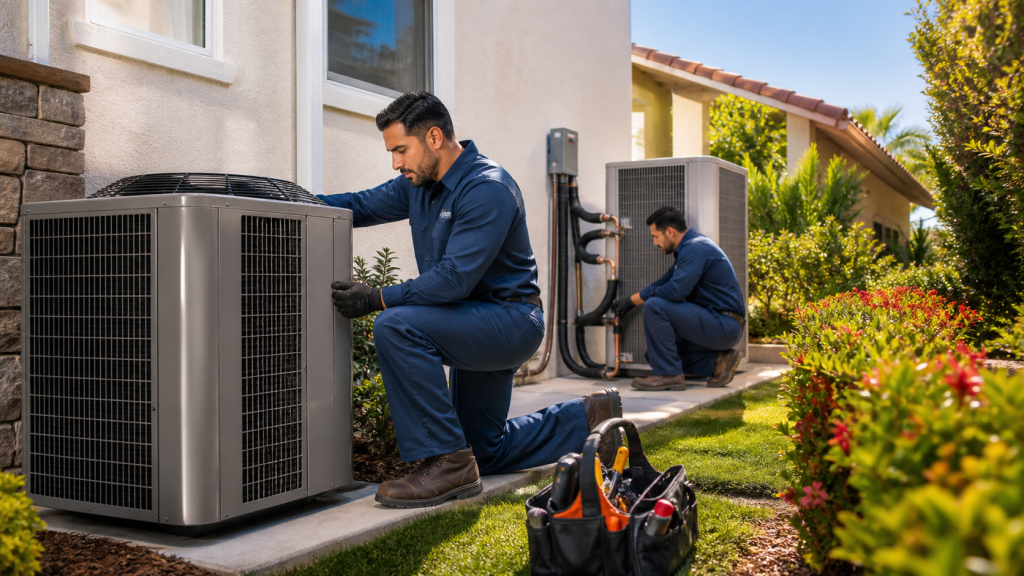
- Outdoor condenser placement with enough airflow and some shade
- Service access so technicians can reach equipment safely and quickly
Noise, aesthetics, and zoning are also part of the plan. Some homeowners want quieter condensers near patios or bedroom windows. Multi-story homes or properties in hotter microclimates may need zoning or duct modifications to deliver even cooling. Our primary focus is always a clean, code-compliant HVAC installation that delivers consistent comfort; solar planning can then be coordinated around that core system if desired.
Planning for Energy Efficiency, with or Without Solar
Whether or not you add solar right away, improving HVAC efficiency is one of the most effective ways to manage energy costs in Los Angeles. We help homeowners estimate expected HVAC electricity use by looking at:
- Equipment efficiency ratings and size
- Typical run times in our warm, sunny climate
- Your thermostat settings and schedule habits
There are smart ways to lower energy use without giving up comfort:
- Sealing duct leaks so cooled air actually reaches the rooms
- Improving insulation to keep heat out during long sunny days
- Upgrading to higher-efficiency HVAC equipment
- Adding smart thermostats and controls to avoid waste
These steps reduce your overall energy demand. If you later choose to install solar, a more efficient HVAC system and tighter home envelope can reduce the number of panels needed to help offset your electricity use.
Repair or Replace: Get the HVAC Decision Right First
If your current system is older or unreliable, it is important to decide whether to repair or replace before you make any long-term energy investments. A worn-out, low-efficiency unit can use far more power than necessary and still fail during peak heat.
Many AC units, furnaces, and heat pumps in Southern California have lifespans that depend on use, maintenance, and installation quality. Warning signs that it might be time to consider replacement include:
- Frequent breakdowns during hotter months
- Hot and cold spots that never seem to improve
- Rising energy bills even when your usage habits stay the same
- Older equipment that uses outdated refrigerant or technology
When we compare options, we look at the total picture, not just the next repair bill. Keeping a failing system running may mean higher monthly energy use and more service calls. Upgrading to a high-efficiency, properly sized system can often reduce energy use, improve comfort, and provide a more dependable foundation for any future solar investment.
Our goal is to provide clear repair-versus-replacement guidance so you are confident your home’s main comfort system is solid before you consider additional upgrades.
Choosing the Right HVAC Brands, Features, and Controls
Once the design and repair-versus-replace questions are settled, the next step is selecting equipment. Choosing reputable HVAC brands and models matters for comfort, reliability, and serviceability over the long term.
You do not need every advanced feature, but you do want:
- Quality components and strong manufacturer support
- High SEER2 and EER2 ratings for cooling, and efficient AFUE or HSPF2 ratings where they apply
- Variable-speed compressors that can match output to the home’s needs
- ECM blower motors that keep airflow steady with less power
Smart thermostats and modern controls can further improve comfort and efficiency. Features such as scheduling, remote access, and system monitoring help fine-tune how and when your HVAC equipment runs. If you add solar in the future, these controls can make it easier to align some of your HVAC run time with daytime solar production, but their primary role is to enhance comfort and reduce waste.
How Solar Fits in After Your HVAC System Is Optimized
Once you have an efficient, well-designed HVAC system in place, solar panels can be considered as a way to help offset part of the electricity that system uses. At that stage, your solar provider can look at your actual or projected HVAC energy use, along with the rest of your home’s electrical demand, to recommend an appropriate solar array size.
Because the HVAC system has already been optimized, you avoid sizing solar around avoidable waste. Instead, solar can be used strategically to support a well-performing comfort system and help manage long-term energy costs.
Protect Your Investment with Ongoing HVAC Maintenance
After installation, regular HVAC maintenance is critical. You are protecting both your comfort and any long-term energy choices you make.
Our maintenance and service plans are designed to keep systems steady across Los Angeles’ long cooling seasons. Routine care helps keep:
- Coils clean so heat moves in and out efficiently
- Refrigerant charge correct for peak performance
- Airflow balanced and ducts sealed to avoid hot rooms and wasted energy
- Controls, sensors, and safety devices working the way they should
Seasonal tune-ups, filter changes, performance checks, and careful troubleshooting help your HVAC system run the way it was designed to. With a reliable, efficient HVAC system as the foundation, you can then decide whether and when solar is the right next step for your home.
Get Started With Your Project Today
If you are ready to cut energy costs and improve comfort, our team at Best HVAC LA can design and install a customized solar HVAC installation in Los Angeles tailored to your home. We will walk you through equipment options, available incentives, and the installation timeline so you know exactly what to expect. To schedule a consultation or request a detailed quote, simply contact us and we will follow up promptly.