
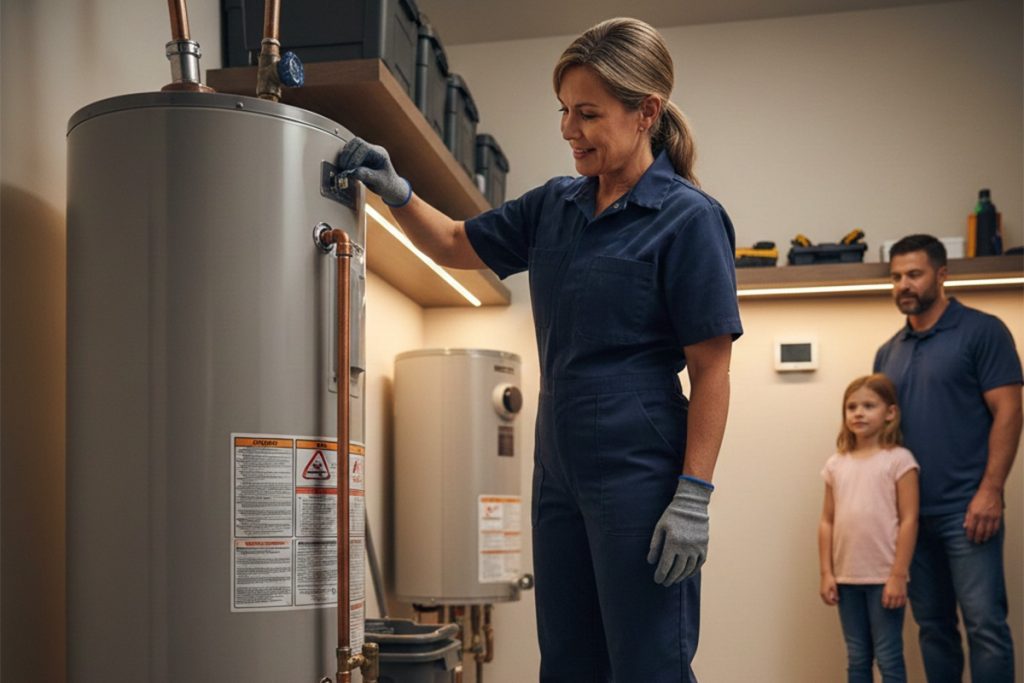
Water heaters are essential appliances in every home, providing hot water for showers, dishwashing, laundry, and more. While they make daily life easier, they can also pose serious safety risks if not properly maintained or handled. From leaks and scalding to gas hazards, understanding how to safely operate and maintain your water heater is critical to keeping your family safe.
Here’s what every homeowner needs to know about water heater safety.
1. Know the Risks of a Malfunctioning Water Heater
Water heaters may seem low-risk, but several hazards can arise if the unit is neglected or improperly installed:
- Scalding: Water that is too hot can cause burns, especially for children or elderly family members.
- Leaks and Flooding: A small leak can quickly escalate, damaging flooring, walls, and personal property.
- Gas Leaks: For gas water heaters, a malfunction can result in dangerous leaks or even carbon monoxide exposure.
- Explosions: Though rare, over-pressurized or improperly maintained water heaters can rupture, leading to serious injury and property damage.
Understanding these risks is the first step toward preventing accidents.
2. Set Your Water Heater to a Safe Temperature
Many homeowners set their water heaters too high, thinking hotter water cleans better or feels more luxurious. The reality is that water above 120°F (49°C) can cause serious burns in just a few seconds.
- Recommended Setting: 120°F (49°C) for household use
- Tip: If you have young children, consider installing anti-scald devices at faucets or showerheads for extra protection.
3. Inspect for Leaks Regularly
Leaks are a common issue that often goes unnoticed until significant damage occurs. Inspect your water heater for:
- Puddles or dampness around the base
- Rust or corrosion on the tank or pipes
- Strange noises, such as popping or banging
Early detection of leaks can prevent costly water damage and alert you to potential system failure.
4. Check the Pressure Relief Valve
Every water heater has a temperature and pressure (T&P) relief valve designed to prevent explosions by releasing excess pressure. It’s essential to test this valve annually:
- Lift the valve lever to ensure water flows through the discharge pipe.
- Release the lever and confirm it snaps back into place.
If the valve is faulty or stuck, have it replaced immediately by a licensed professional.
5. Maintain Your Water Heater Regularly
Routine maintenance improves safety, efficiency, and the lifespan of your water heater. Recommended maintenance includes:
- Flushing the tank annually to remove sediment buildup
- Inspecting the anode rod for corrosion and replacing it if necessary
- Checking for rust, leaks, or loose connections
- Scheduling professional inspections for gas units or complex issues
Regular maintenance prevents dangerous malfunctions and ensures reliable hot water throughout your home.
6. Be Cautious With DIY Repairs
Water heaters involve electricity, gas, and pressurized water, making DIY repairs risky. Attempting repairs without proper knowledge can lead to leaks, electrocution, gas leaks, or even explosions.
Always call a licensed HVAC or plumbing professional for:
- Gas line repairs or replacements
- Electrical component issues
- Tank replacement or relocation
- Major leak repairs
7. Ensure Proper Ventilation (For Gas Water Heaters)
Gas water heaters require proper ventilation to prevent dangerous carbon monoxide buildup. Make sure:
- Vents are unobstructed and properly sealed
- There’s adequate airflow around the unit
- Carbon monoxide detectors are installed near the water heater and bedrooms
Never ignore unusual odors like rotten eggs or strong gas smells—leave the home immediately and contact emergency services.
8. Upgrade Old or Unsafe Water Heaters
Most water heaters last 8–12 years. If your unit is older, corroded, leaking, or inefficient, replacement is safer than repair. Modern water heaters include improved safety features, better energy efficiency, and advanced temperature controls.
Upgrading not only protects your family but also saves money on energy bills and reduces the risk of emergency failures.
9. Educate Your Family
Make sure everyone in your household understands basic water heater safety:
- Avoid touching hot pipes or the tank
- Know how to shut off the water supply in an emergency
- Never tamper with the thermostat, gas line, or electrical components
Knowledge is a simple but powerful tool in preventing accidents.
Final Thoughts
Water heaters are often taken for granted until something goes wrong. By understanding the risks, performing regular maintenance, and practicing safe usage, you can protect your family and your home from serious accidents.
If your water heater is old, leaking, or showing warning signs, don’t wait—contact a licensed professional for inspection or replacement. Safety, efficiency, and peace of mind are worth it.