Stop the Surprise Breakdown: Plan Your AC Replacement
When an AC fails in Los Angeles, it usually happens on a hot, sunny day when you need it the most. The house heats up fast, tempers get short, and every HVAC company in town is already busy. Waiting until your system dies is often the most stressful and expensive way to handle AC replacement in Los Angeles.
A better way is to think in terms of a replacement timeline. You watch for early warning signs, plan your budget, and bring in a professional before you are in an emergency. That way, you keep your cool, both in your home and in your decision-making.
AC replacement here is a bit different than in cooler cities. Our cooling season is long, electric rates are high, and systems work hard almost all year. That constant use wears equipment out faster and makes efficiency much more important. We like to break the planning into three stages: about six months out, thirty days out, and one week out from likely failure. Here is how that looks in simple, real-world steps.
Six Months Out: Signs and Smart Prep
Around six to twelve months before an AC fails, it usually starts whispering that something is wrong. If you catch those whispers, you can avoid a sudden shutdown.
Common early warning signs include:
- Higher electric bills even though you have not changed your thermostat settings
- The AC turning on and off more often than it used to
- More repair visits in a short time, especially for leaks or electrical issues
- Some rooms that never quite cool down, while others feel too cold
- Louder operation, new rattles, squeals, or vibration
Age matters too. In our Southern California climate, systems that are around the ten to fifteen year mark have often had a lot of run time. Even if they are still cooling, it is smart to start planning instead of waiting for a major failure.
This is a good stage to start gentle financial planning. You do not need exact numbers, but you can:
- Learn rough cost ranges for different system sizes and types
- Think about how home layout, ductwork, and equipment efficiency might affect price
- Set aside a small amount each month in a separate savings bucket
- Ask about possible financing, rebates, or utility incentives in your area
Getting a ballpark estimate from a local HVAC contractor now helps you match your budget to realistic options. You are not committing, you are just preparing.
It is also the right time to research who you want to work with and what kind of system might fit your space. Good questions for HVAC companies include:
- Are you properly licensed and insured for this area?
- How do you handle permits and inspections?
- What warranties do you offer on labor and equipment?
- Do you offer ongoing maintenance plans after installation?
You can start learning about different system types that work well here, like traditional central AC, heat pumps, ductless mini-splits, or zoning setups for multi-story homes and small businesses. When you build a relationship with a trusted company months before you need them, any surprise problem later feels a lot less chaotic.
Thirty Days Before: Lock in Your Best Options
About a month before a likely replacement, it is time to move from research into action. In Los Angeles, late winter and spring are usually ideal for a full system assessment, because schedules are more open and the biggest heat has not hit yet.
A solid professional assessment should include:
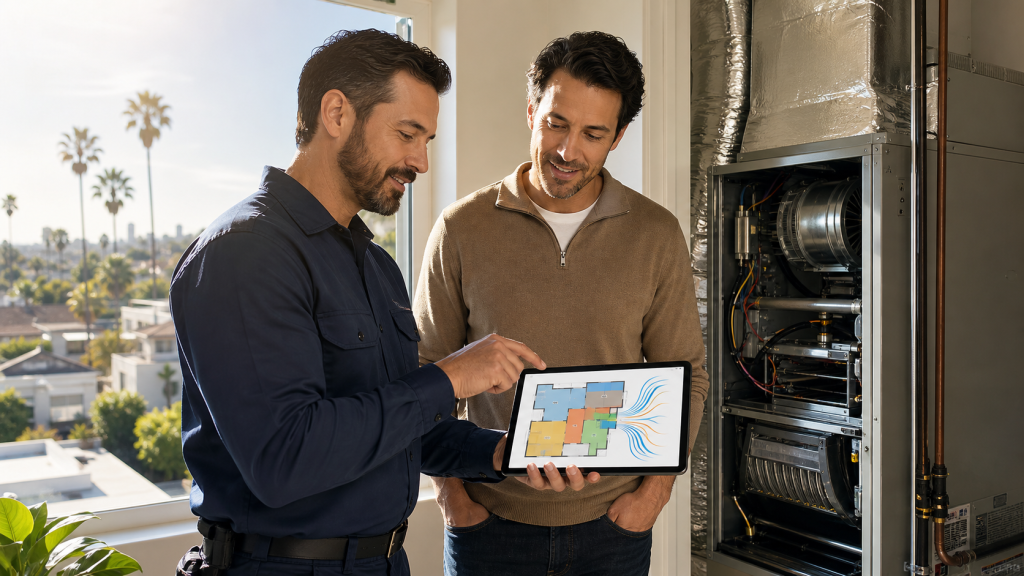
- Load calculations to size the equipment for your home or business
- A close look at existing ductwork for leaks, damage, or poor design
- Checks on airflow, insulation, and vents in key rooms
- A review of your thermostat and controls for compatibility
From that visit, you can get a clear picture: is a major repair still a smart move, or is full AC replacement in Los Angeles the better long-term value for comfort and energy use?
Next comes choosing the right equipment for our climate. Efficiency ratings can feel confusing, but your tech can walk you through:
- SEER2 and EER for cooling efficiency
- HSPF if you are considering a heat pump that also provides heating
- What counts as a good match for our weather instead of paying for levels you will not really use
Capacity choice is just as important. Bigger is not better. An oversized unit may cool the air quickly but will not run long enough to manage humidity or distribute air evenly, and that can leave your space sticky and uneven.
This stage is also when to think about indoor air quality add-ons that matter here, such as:
- Stronger filtration to handle smog, dust, and allergens
- UV lights inside the system
- Whole-home air cleaners that work with your ducted system
Before you sign anything, plan the details to avoid delays:
- Confirm an installation date before everyone books up for summer
- Talk through permits, inspections, and any HOA or building rules
- Review written proposals, including what is included, what is not, and how long warranties last
One Week Before: Get Your Space Ready
A week before installation, the big decisions are made. Now it is about making the day go smoothly for you and for the crew.
First, confirm the details with your HVAC contractor:
- Exact installation date and arrival window
- How long the work should take and if it is a one-day or multi-day job
- Who needs to be home or on-site to approve any small changes
Ask what is included in the project. This may cover a new thermostat, outdoor pad, line set, moving the outdoor unit to a better spot, hauling away the old equipment, and any duct changes you agreed to. Also ask what to expect during the day, like noise levels, dust, temporary loss of cooling, and any short electrical or gas shutoffs.
Then prepare your home or business so the team can work quickly and safely:
- Clear furniture and décor away from indoor units, hallways, and attic access
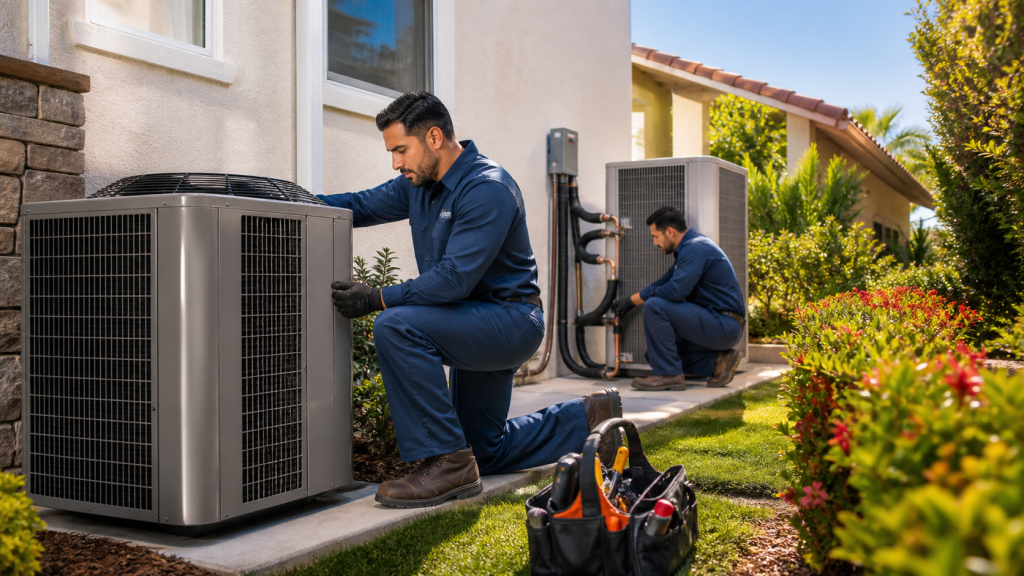
- Make sure the path to the outdoor unit is open and easy to reach
- Arrange parking or gate codes in tight LA neighborhoods or shared lots
- Cover or move valuables, electronics, artwork, and rugs in high-traffic areas
For comfort and safety, try to plan the installation on a milder day if possible, or arrange temporary cooling for kids, older family members, or anyone working from home. Keep pets in a secure room or with a friend so they are away from open doors, ladders, and tools.
A quality install should look organized and clean. At the end, your tech should check refrigerant levels, airflow, and thermostat programming, and walk you through basic operation so you know how everything works.
After the Install: Keep Your New System Strong
Once the new AC is in, the first week is a good time to make sure everything feels right. You should notice:
- Steadier temperatures from room to room
- Reasonable run times without constant short cycling
- Quieter operation than your old unit
You can do a few simple checks yourself. Learn how to access and replace the filter, look at the thermostat schedule to match your daily routine, and peek at the condensation line to be sure it is not dripping where it should not. Make sure the outdoor unit has open space around it. If you hear odd noises, notice uneven cooling, or see the system starting and stopping very often, call your installer so they can fine-tune things.
To protect your investment, set up regular HVAC maintenance. In our long cooling season, professional service keeps your system clean and running well. A good maintenance visit usually includes coil cleaning, electrical checks, refrigerant checks, drain cleaning, and performance testing.
Make sure your equipment is registered so warranties are active, and ask what actions could void those warranties, like skipping required service or having unapproved work done.
Everyday habits also go a long way:
- Use steady thermostat settings instead of big swings up and down
- Pick reasonable summer temperatures that balance comfort and cost
- Use ceiling fans to help you feel cooler at slightly higher AC settings
- Change filters often, especially in high-smog or high-dust areas
- Seal obvious gaps and add shade where you can, and learn how to use any smart thermostat features you have
When you follow the six-month, thirty-day, and one-week plan, AC replacement stops being a crisis. It becomes a planned project that keeps your home comfortable and ready for the next long stretch of Los Angeles heat.
Get Started With Your Project Today
If your current system is struggling to keep up with the Los Angeles heat, we are ready to help you plan a smooth upgrade. At Best HVAC LA, our experienced technicians provide honest recommendations and precise installation so you get reliable comfort and better efficiency. Learn more about our professional AC replacement in Los Angeles and schedule a visit at a time that works for you. Reach out today and let us take care of the details so you can enjoy a cooler, more comfortable home.