Plan Your Anaheim AC Install for Quiet, Even Comfort
A good AC installation in Anaheim should feel almost invisible. The house stays cool, the air feels gentle, and you barely notice the system running. When the planning is rushed, you get hot spots, loud vents, doors that move when the air kicks on, and a system that never seems to shut off.
The big difference happens before the new equipment shows up. A careful pre-install walkthrough sets up the duct design, register layout, and return-air sizing so the system can do its job quietly. That walkthrough focuses on how air will move through your home, not just on the size of the new AC.
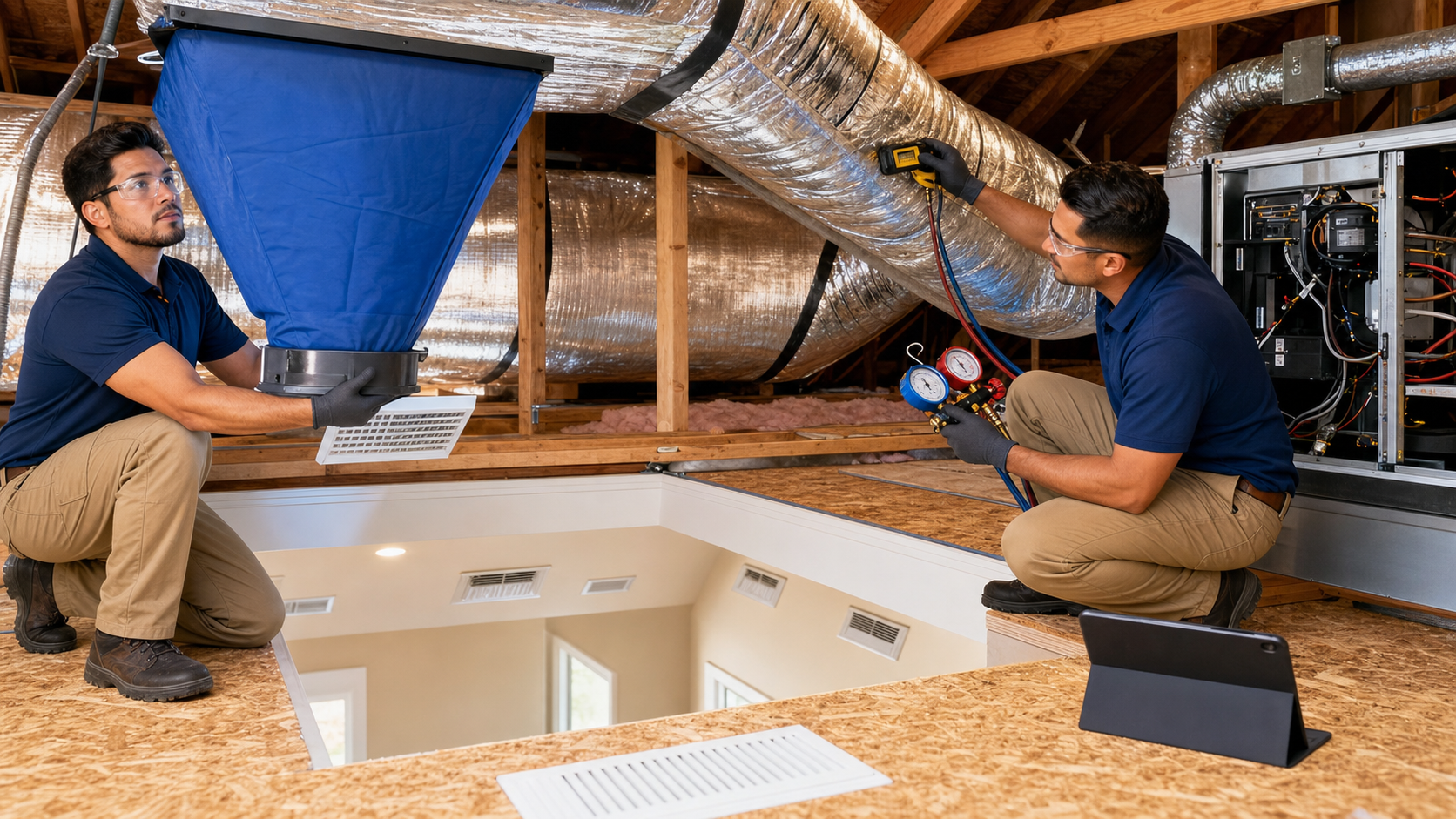
During a professional walkthrough, we pay close attention to airflow measurements, where supply registers should go, how large and where returns should be, and how all of that affects day-to-day comfort and sound. When those pieces work together, your AC can cool your home evenly without becoming the loudest thing in the room.
Why a Pre-Install Walkthrough Matters in Anaheim Homes
Anaheim has a long cooling season, strong sun, and plenty of stucco homes with big windows. Many homes have second stories, room additions, or converted spaces that heat up faster than the rest of the house. Those areas often end up either too warm or too noisy if the ductwork is not checked before the new AC goes in.
Common local issues include:
- Older ducts that were sized for a different system
- Room additions that share a duct run that is already maxed out
- Long flex duct runs in attics that pick up heat and lose airflow
- Single returns trying to serve large or two-story layouts
Comfort, noise, and efficiency always move together. If ducts are too small or too twisted, air speed goes up. That means whistling registers, loud grilles, and rooms that feel drafty, even when the thermostat number looks fine. The AC might short cycle or seem to run forever, which wastes energy and can shorten equipment life.
A systems-first approach looks at:
- The new AC’s airflow needs
- The size and layout of the existing ducts
- How each room currently feels and sounds
By evaluating the whole HVAC system instead of only swapping equipment, you can decide if a simple replacement is enough, if a few duct changes are needed, or if some areas should be redesigned for better airflow.
Measuring Airflow Before the AC Ever Turns On
Before recommending any changes, we start with a room-by-room walkthrough. We look at room size, ceiling height, window direction, shading, and insulation. We also listen to you about hot rooms, noisy vents, or doors that move when the system runs. All of that helps us estimate how much cooling each area really needs.
When it makes sense, we use tools such as:
- Anemometers to check air speed at supply registers
- Flow hoods to measure airflow coming out of or into grilles
- Static pressure readings to see how hard the blower is working
We then compare those readings with the airflow that the new AC will need. Modern equipment has manufacturer-recommended CFM per ton of cooling. We take that total airflow and split it up by room so the home can stay even from one space to another. When each room gets close to its target, the system can run longer, quieter cycles instead of short, loud bursts.
During Anaheim walkthroughs, we often find:
- Crushed or kinked flex duct in the attic
- Undersized main trunks feeding too many branches
- Runs with many sharp turns that choke airflow
- Rooms where the doors are always kept closed without a proper return path
Spotting these issues before install day means they can be fixed along with the new AC installation in Anaheim. That keeps noisy registers, pressure problems, and comfort complaints from popping up right after the new system goes in.
Smart Register Placement for Comfort and Low Noise
Supply register placement has a big impact on how a room feels. The goal is to throw cool air where the heat comes from, then let it mix gently into the room. In many Anaheim homes, that means pointing air toward sun-facing windows or exterior walls instead of straight down onto beds or sofas.
Good supply placement aims to:
- Counter heat gain from windows and outside walls
- Avoid blowing directly on people for long periods
- Help air spread and mix for even temperatures
- Keep air speed at the grille comfortable and quiet
During a walkthrough, we may suggest moving a grille a few feet, adding a new supply to a problem room, or changing the register style. Some registers spread air in multiple directions, which can help reduce drafts. Others are better for longer throws in big rooms.
Register type and size matter too. A grille that is too small tries to push too much air through a tight opening, which often creates whistling. One that is too large might not throw the air far enough. Matching grille size and style to the target airflow keeps the sound level down while still feeding the room.
We also look at how you plan to use the space:
- Furniture layout, like big sectionals or tall cabinets
- Future remodel plans that might change walls or doorways
- Noise sensitivity in nurseries, home offices, or media rooms
When the layout supports smooth circulation, your filters and thermostat work better because they see a more accurate picture of the whole home.
Quiet Comfort Starts at the Return-Air Grille
Supply vents get most of the attention, but returns are just as important. They are like the lungs of the system. If they are too small or too few, the blower has to pull against a tight restriction. That raises static pressure, makes airflow louder, and can stress the new AC.
Right-sized returns help by:
- Keeping blower work and noise lower
- Allowing the system to move its designed airflow
- Supporting longer, more comfortable run times
Return placement also affects comfort and sound. Smaller homes might work well with a central return in a hallway. Larger or two-story homes usually do better with multiple returns, so each area has a good air path back to the system. This helps prevent pressure differences that cause doors to slam or rattle when the AC turns on.
For noise control at returns, we look at:
- Keeping returns away from very quiet spaces where intake noise is more noticeable
- Using noise-reducing grilles or lined return drops when needed
- Adding turning vanes in sharp elbows to smooth the airflow path
Filter choice ties into return design too. Higher-MERV filters can help with indoor air quality, but they need enough surface area so they do not choke airflow or create extra noise. During the walkthrough, we plan for filter size and location with service in mind, so routine filter changes stay simple and the system can stay quiet and efficient over time.
From Walkthrough to Cool, Quiet Anaheim Living
When you put it all together, a thoughtful pre-install walkthrough is what turns a basic AC installation in Anaheim into a cool, calm home. Room-by-room airflow checks, smart register placement, and properly sized returns all work as one system. The result is even temperatures, gentle air movement, and an AC that runs in the background instead of taking over the house.
This kind of planning also supports energy-efficient operation and fewer surprise problems. You are less likely to deal with noisy vents, hot or stuffy rooms, or equipment that seems to be struggling. For homeowners in Anaheim, a careful walkthrough is the starting point for long-term comfort, quiet operation, and AC equipment that can do its job the way it was designed.
Get Started With Your Project Today
If your current cooling system is struggling to keep up, we are ready to help you upgrade with professional AC installation in Anaheim tailored to your home and budget. At Best HVAC LA, our technicians take the time to size and install your new unit correctly so you get reliable comfort and efficiency from day one. To schedule a visit or request a quote, simply contact us and we will walk you through the next steps.