Stop Fighting Hot and Cold Rooms in LA Homes
Uneven rooms can make a whole house feel wrong. One bedroom is sticky and warm, the next room is chilly, and the hallway thermostat keeps saying everything is fine. As we move from late spring into long cooling seasons in Los Angeles, Ventura, and Orange Counties, these comfort fights usually get worse, not better.
Many people react by picking one fix at random. They may pay for duct repairs, add more attic insulation, or install smart vents, hoping something finally evens things out. Without a plan for the whole system, those steps can feel like guessing.
We like to think of it as room-by-room comfort triage. You look at the entire property, every space, and how the HVAC system really serves those spaces. In many homes, a professionally designed HVAC zoning system in Los Angeles solves more comfort problems than scattered ductwork or insulation alone. As an HVAC company that works on residential and commercial systems, we focus on the big picture, not just one gadget or upsell.
In this guide, we will walk through why some rooms misbehave, how to triage problem areas, when zoning is the smarter move, and how a good zoning design ties everything together so your system works with your building instead of fighting it.
Why Some LA Rooms Never Feel Comfortable
Homes and small commercial spaces in our area rarely follow a perfect square floor plan. There are second floors added later, ADUs dropped in the back, converted garages, and large west-facing living rooms that soak up afternoon sun. Each of these spaces has a different heat load and a different comfort need.
Most buildings still run on a single-zone system. One thermostat, often in a hallway, tells the AC when to start and stop. That one reading is supposed to stand in for:
- Upstairs bedrooms that trap heat
- Rooms with big glass windows and direct sun
- Interior rooms with no windows at all
- Additions or converted spaces far from the air handler
A single thermostat cannot reflect all those different conditions, especially on days when mornings are cool and afternoons get hot. Some areas will always be out of sync.
Under the hood, several HVAC design issues can pile on:
- Equipment that is too small or too large for the actual load
- Supply vents placed poorly or returns missing where they are needed
- Ducts that are unbalanced or never properly sized
- Leaky or crushed ducts that choke off airflow
On top of that, support issues like thin insulation, older windows, and leaky doors can push certain rooms over the edge. These are real concerns, but they do not always mean you need to rebuild the whole building envelope.
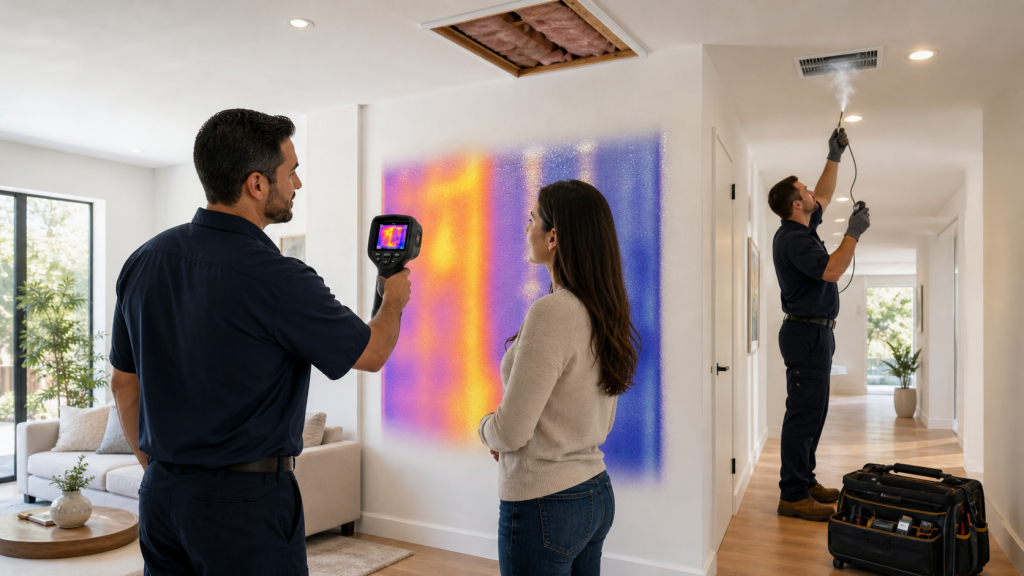
Before we suggest any fix, we rely on diagnostics. That includes static pressure readings in the duct system, airflow checks at vents, and a close look at how the current equipment lines up with the space it is trying to serve. Then we can see if the main problem is the equipment, the duct design, or the way air is being distributed.
Room-by-Room Comfort Triage Before You Spend Big
Instead of jumping into a big project, it helps to slow down and do a simple comfort triage. This is something homeowners and property managers can start on their own before our techs even arrive.
Identify patterns:
Write down which rooms feel:
- Too hot
- Too cold
- Stuffy or stale
Note the time of day and what is happening. Afternoon sun in the living room? Guests in a spare bedroom? Office full of people on weekday afternoons?
Note building realities:
Look at basics like:
- Which side faces west and gets heavy sun
- Which areas are on the second floor
- Where additions and converted garages sit in the layout
- Which rooms are rarely used but still fully conditioned
Look at your current HVAC setup:
Without doing DIY work, you can still note:
- Age and type of the main HVAC unit
- Whether you have one system or more
- Where the main thermostat is located
- Any visible duct issues like disconnected or crushed sections
When we visit, this info, plus our testing, helps us rank possible fixes. In some homes, sealing leaky ducts and adding a return in a hot room might solve the biggest complaints. In others, the system is trying to serve spaces with completely different needs, and zoning becomes the logical next step.
Insulation and general building upgrades are helpful, but they do not fix a distribution problem when one system is trying to serve spaces that behave very differently. That is where zoning often moves to the top of the list.
When HVAC Zoning Outperforms Ductwork and Insulation
HVAC zoning is like giving different parts of your home or office their own voice. You have motorized dampers inside the ducts that open and close by zone, multiple thermostats or sensors, and a control panel that tells the system where to send air and when.
Zoning often shines in spaces like:
- Two-story homes where upstairs bedrooms get hot while downstairs stays cool
- Houses with large glass walls or west-facing rooms that heat up late in the day
- Properties where additions, converted garages, or ADUs share one central system
Compared to other options:
- Duct repairs and rebalancing are important when design is poor or leaks are bad, but they still leave you with one average thermostat and no way to treat areas differently.
- Insulation improvements help reduce heat gain and loss, but they do not let different zones run at different times for different needs.
- Smart vents try to fake zoning at the register, but closing too many vents without a proper plan can raise static pressure and stress the equipment.
A properly designed zoning system is built around how your existing or new unit, duct layout, and load profile work together. We plan airflow, damper sizing, and control logic on purpose, so the system stays efficient and protected while giving each area its own level of control.
Designing a Zoning System That Actually Works in LA
A good zoning setup is not just some extra thermostats on the wall. It starts with careful planning.
We look closely at:
- Equipment compatibility, age, and capacity, so we know if it makes sense to zone your current unit or plan zoning with a future replacement
- How many zones you really need, often by floor, use type, or sun exposure
- The existing duct layout, to see where dampers can be added and where ducts may need changes to prevent noise or airflow issues
Controls are important, but they are not the star of the show. We choose zoning panels and thermostats that work well with common systems in Southern California, including heat pumps, gas furnaces, and mixed systems. Thermostat placement matters too. A thermostat in a rarely used hallway may not reflect how people actually live in a space.
Done right, zoning can:
- Cut down on conditioning unused rooms
- Let the equipment run longer cycles in a more efficient range
- Reduce strain on parts by avoiding constant short cycling
After installation, we commission the system. That means checking damper action, reviewing temperature splits across zones, and measuring static pressure. The goal is steady, reliable comfort during long cooling seasons and mild heating periods without surprises.
Zoning, Replacement, and Add-On Systems in LA Properties
Zoning is also part of the big repair versus replacement conversation. When a unit is old and struggling, it may be smarter to pair a new, more efficient system with zoning so you do not spend heavily on ducts alone. You solve comfort and efficiency at the same time.
If your equipment is still in good shape, adding zoning to that existing system can be a major upgrade without changing the entire unit. The right plan depends on your building and your long-term goals.
People often ask how zoning compares to adding a second central system or installing mini-splits. In some cases, a separate system or ductless mini-split is perfect, especially for a detached studio or hard-to-reach ADU. But for many single-family homes or small offices, zoning one or two central systems is simpler to run and maintain than several independent units.
For commercial and light commercial spaces, zoning and scheduling can keep occupied areas comfortable while avoiding wasted cooling in empty rooms or suites. We always look at long-term operation, maintenance, and service access when suggesting zoning, new equipment, or extra systems, not just the first project on the list.
Get Started With Your Project Today
If you are ready to improve comfort and efficiency in every room, we can design a customized HVAC zoning system in Los Angeles that fits your home and budget. Our team at Best HVAC LA will walk you through your options, explain the installation process, and answer any questions before we get started. Reach out today through our contact page so we can schedule a convenient time to evaluate your space and provide a clear, upfront estimate.