Stop Wasting Money on “Drive-by” HVAC Tune-Ups
A lot of people in Los Angeles and Orange County think they are taking care of their AC or furnace when they grab a cheap coupon for a quick tune-up. The technician shows up, walks around the unit for a few minutes, says everything looks fine, and leaves. Then the first real heat wave hits and the system struggles, runs nonstop, or breaks down. That “maintenance” visit did not help at all.
A proper HVAC tune-up in Los Angeles should do real work for you. It should improve comfort inside your home or business, support better reliability, help keep your energy use under control, and protect your safety. It is not just checking a few boxes on a form.
There are clear red flags that show when a visit is low-quality. There are also clear signs of a professional job. We want to walk through what should be measured, what should be cleaned, and what should always be documented so you know what you are actually getting.
Time and Transparency: First Clues of a Bad Tune-up
One of the easiest ways to spot a weak tune-up is how long the technician is on site. A real visit on a typical residential system usually takes more than a quick coffee break. The tech needs time to open panels, check parts, run the system, and record readings. A 15 or 20 minute “in and out” visit is usually a bad sign.
Watch for early red flags when the tech arrives:
- Shows up late with no call or message
- Walks in without shoe covers or care for your floors
- Tries to get you to sign paperwork before explaining what will be done
- Gives vague answers when you ask what the tune-up includes
A solid, professional visit feels different. You should expect:
- A quick rundown of what the technician is going to do
- Clear answers to simple questions, in plain language
- A clear pause to get your approval before any extra work or fees
- Written findings at the end, not just “you are all good”
If you are left unsure about what was done, or you only hear general comments, that is a strong hint that the tune-up was not very thorough.
What Should Be Measured on Every HVAC Tune-Up
Good technicians do not guess, they measure. Your system cannot tell you “I feel fine” but the numbers can. During a proper tune-up, the tech should take real readings and record them.
Key measurements usually include:
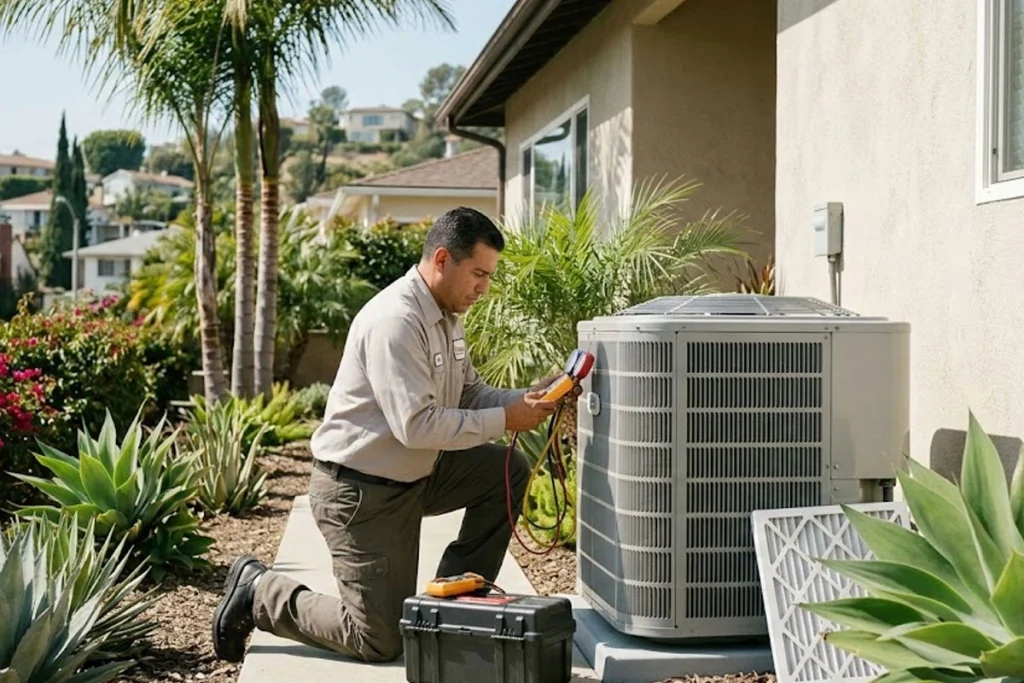
- Refrigerant pressures and superheat or subcooling
- Temperature difference between air going into and coming out of the coil
- Static pressure in the duct system with a manometer
- Electrical readings like voltage, amperage, and capacitor microfarads
- Basic airflow checks to make sure the system can move enough air
Watch for red flags like these:
- No gauges, probes, or manometer ever come out of the tool bag
- The tech never uses a thermometer at the supply and return vents
- You only hear “your pressures look fine” with no numbers shared
- Nothing is written down or added to a report
In our warm climate, systems run for long hours, especially during long sunny days. Older buildings, long duct runs, and tight spaces can all put extra stress on the equipment. Small problems in those numbers, if ignored, can turn into poor cooling, higher energy bills, and surprise breakdowns. That is why the measurements matter so much.
What a Real Cleaning Looks Like vs. a Quick Wipe-Down
Cleaning is another area where low-quality visits try to cut corners. A true cleaning goes deeper than just spraying the outside of the unit with a hose and dusting the top.
For a real tune-up, outdoor condenser coils should be cleaned in a way that actually gets dirt out from between the fins, not just rinsed from the front. Indoor evaporator coils, when accessible, should be inspected and cleaned so sticky buildup does not choke airflow. Blower wheels and blower compartments often need attention too, since dust and debris can slow the fan and affect comfort.
Drain and filter care are also key parts of real maintenance:
- Clearing and flushing the condensate drain line
- Checking drain safety switches where installed
- Making sure the drain trap is set up correctly
- Inspecting air filters, and replacing or refitting them if needed
Red flags of shortcut cleaning include:
- The tech never removes any panels on the inside unit
- The attic or closet unit is ignored altogether
- Debris, leaves, or trash are left around the outdoor condenser
- You are told “cleaning is extra” but no one explains what was included in the basic tune-up
If the system looks exactly the same when the tech leaves as it did when they arrived, you probably did not get much cleaning for your money.
Safety, Indoor Air Quality, and Documentation Essentials
Comfort matters, but safety and air quality are just as important. Some checks should never be skipped, especially on gas heating systems.
Safety steps should include:
- Combustion checks on gas furnaces where appropriate
- Gas leak checks at exposed connections
- Carbon monoxide testing near the equipment
- Verifying that venting and clearances look correct
Indoor air quality basics are also part of a thoughtful tune-up. A good tech may:
- Look at ducts at a few registers for heavy dust buildup
- Talk about filter options and how often you should replace them
- Mention add-ons like air cleaners or UV systems when they actually fit your needs, not push them on every visit
At the end, documentation ties it all together. You should receive a written or digital report that includes:
- Measured readings and test results
- Photos of any areas of concern, when possible
- Notes on what was cleaned and what was inspected
- Clear, prioritized recommendations for any repairs or upgrades
- Simple reminders about future maintenance needs
That report is your proof that a professional HVAC tune-up in Los Angeles really happened, not just a quick stop.
How to Hold Your HVAC Contractor Accountable
You do not need to be an expert to protect yourself from bad maintenance; you just need to ask a few smart questions and pay attention.
Before the visit, you can ask:
- What specific tasks are included in the tune-up?
- About how long will the technician be on site?
- Will we get a written report with measurements and findings?
- If you find issues, how will you explain them and get approval before work?
During the visit, it is okay to politely observe and speak up. Ask the tech to explain any big recommendation in simple terms. If they say a part is bad, you can ask to see readings, photos, or the actual part. A good technician should be comfortable showing you what they see.
After the visit, compare what was promised with what was actually done. Did you get real measurements, cleaning, and documentation, or just a quick walk-around and a bill? If you feel you received a low-quality “maintenance” visit, you can ask for clarification from the company, share your concerns, and if needed, move on to a more reliable provider that takes time to do the work right.
A careful, detailed tune-up is one of the best ways to keep your system ready for long, hot days in Southern California. Companies like Best HVAC LA focus on measured results, real cleaning, and clear reporting so your home or business can stay comfortable with fewer surprises.
Schedule Your HVAC Tune-Up For Reliable Comfort All Year
If your system is due for maintenance, we are ready to help you boost efficiency and avoid costly breakdowns. At Best HVAC LA, our technicians carefully inspect, clean, and fine-tune your equipment so it performs at its best in every season. Schedule your HVAC tune-up in Los Angeles today and enjoy more consistent comfort and lower energy waste. Reach out now to book an appointment at a time that works for you.